
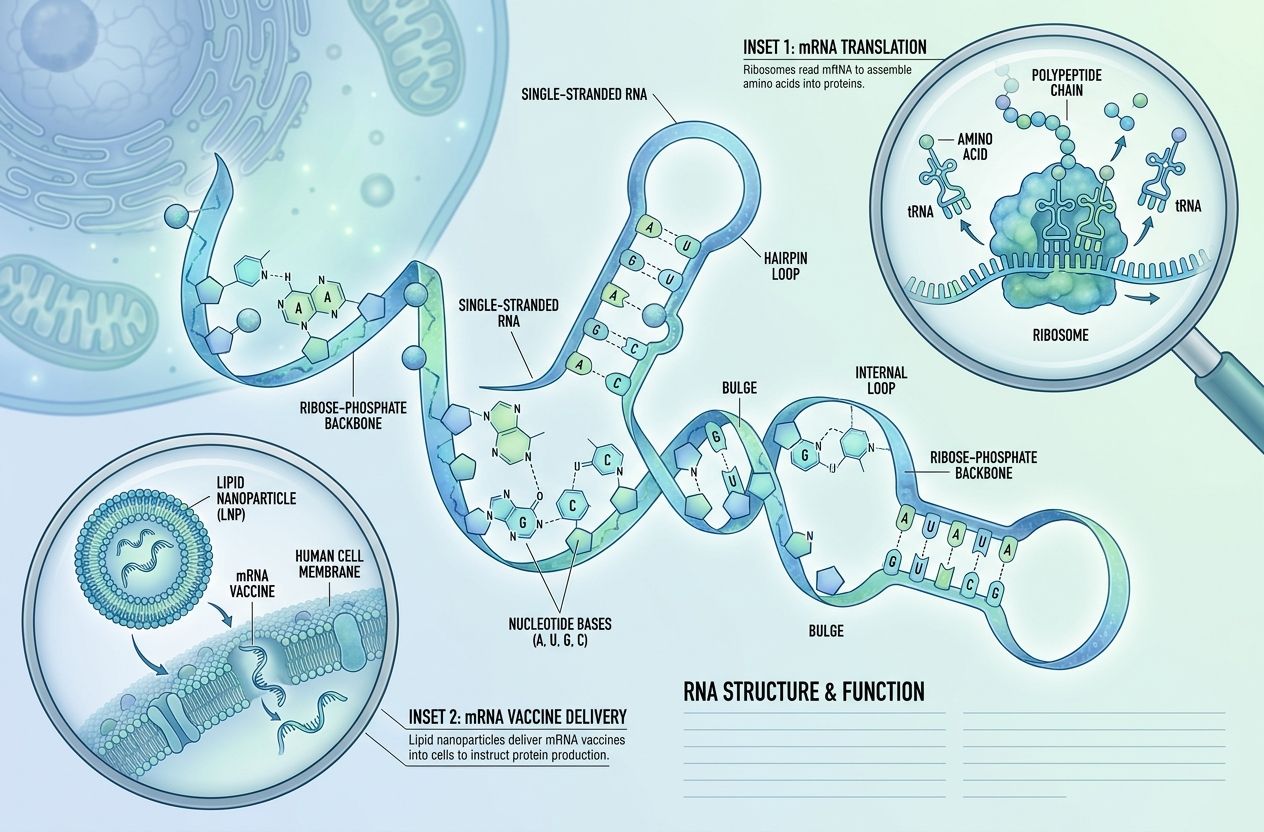
Importance of RNA is central to understanding molecular biology: RNA not only carries information from DNA but also catalyzes reactions, regulates gene expression and enables cutting-edge biotechnologies. This article provides a detailed, accessible guide to RNA’s molecular structure, major types and their biological roles.
Why the importance of RNA matters?
Within the first cellular moments when a gene is expressed, RNA appears as the working copy of genetic information. Understanding the importance of RNA is essential for students and researchers in biology, genetics and health sciences because RNA underpins processes from protein synthesis to evolutionary innovation and therapeutic design.
What is RNA? A molecular overview
Ribonucleic acid (RNA) is a polymeric molecule made of nucleotides, each composed of a ribose sugar, a phosphate group and a nitrogenous base (adenine, cytosine, guanine or uracil). Unlike DNA, RNA is typically single-stranded and uses uracil (U) instead of thymine (T). The single-stranded nature allows RNA to fold into complex secondary and tertiary structures that are critical for their diverse functions.
Key structural features of RNA:
- Ribose sugar: contains a 2′-hydroxyl group (-OH), which increases chemical reactivity and allows unique folding.
- Uracil: pairs with adenine in RNA-DNA and RNA-RNA interactions.
- Single-stranded flexibility: enables intramolecular base pairing and formation of hairpins, loops and pseudoknots.
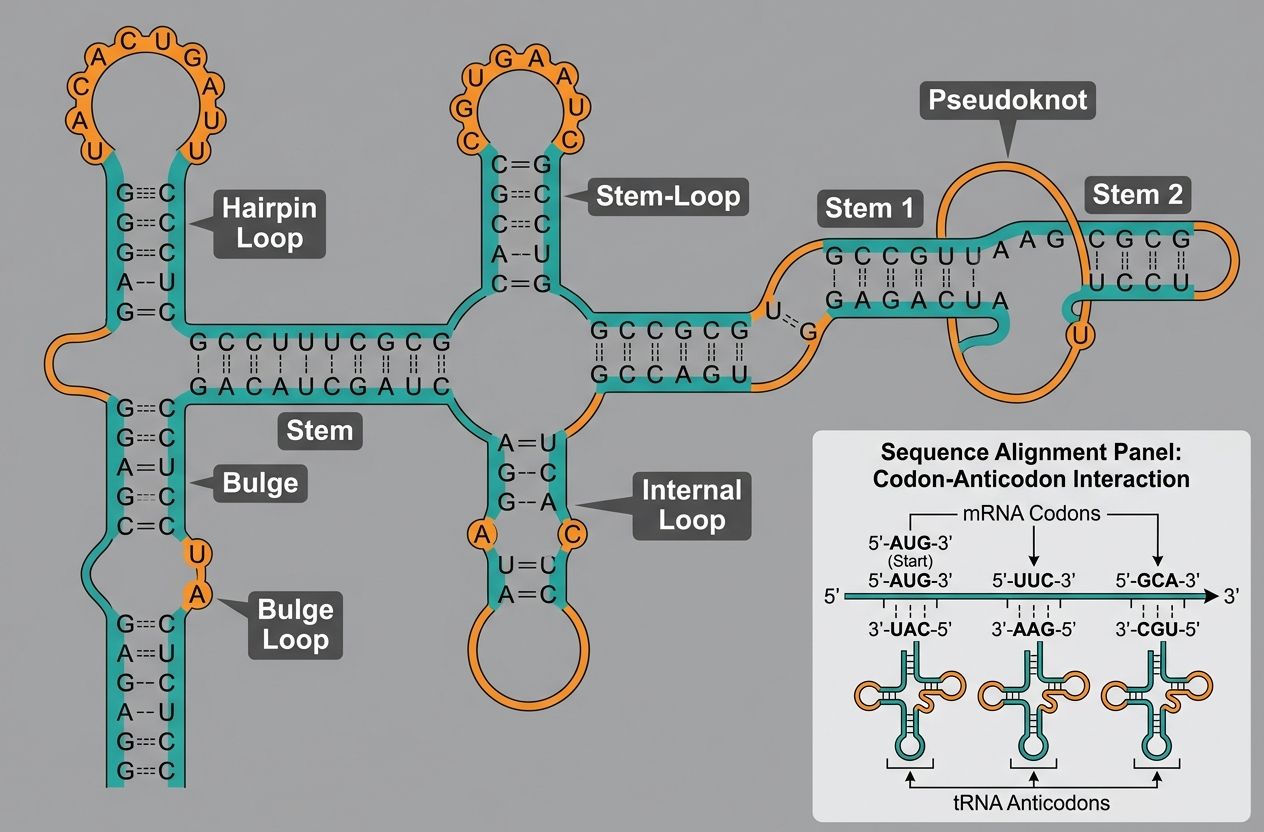
The capacity to fold into well-defined three-dimensional shapes enables many RNAs to act as catalysts or to recognize specific sequences and molecules — properties that go far beyond that of a simple messenger.
Major types of RNA and their classical functions
Historically, three RNA types are central to translation and gene expression: messenger RNA (mRNA), transfer RNA (tRNA) and ribosomal RNA (rRNA). Each plays an indispensable role in converting genetic code into functional proteins.
Messenger RNA (mRNA)
mRNA carries the genetic blueprint transcribed from DNA as a sequence of codons (three-nucleotide units) that specify amino acids. In eukaryotes, mRNA typically contains a 5′ cap and a poly(A) tail that influence stability and translation efficiency. During translation, ribosomes read mRNA sequences to synthesize polypeptides.
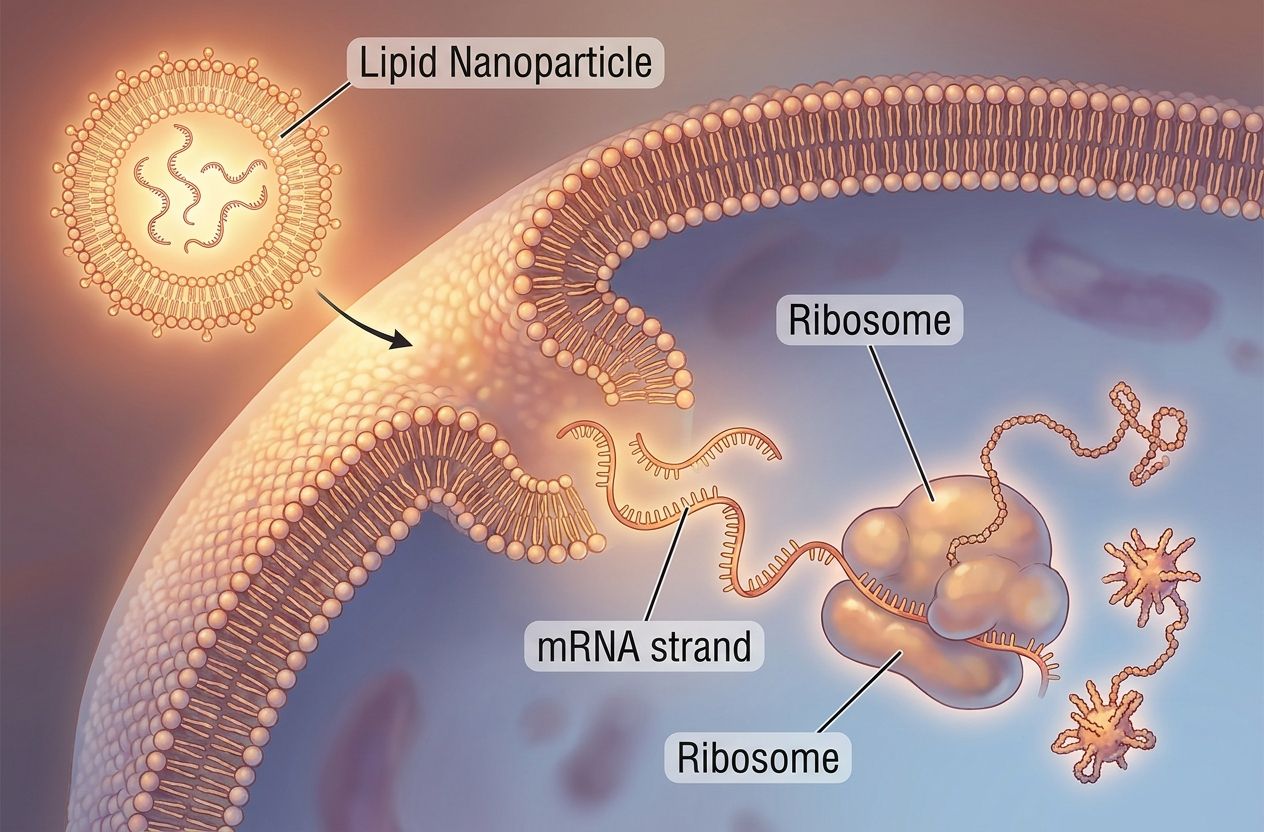
mRNA is also the basis for modern vaccines: synthetic mRNA can be designed to produce viral proteins in host cells, stimulating protective immune responses without using live pathogens — a major breakthrough demonstrated by recent COVID-19 vaccines (WHO: How do mRNA vaccines work?).
Transfer RNA (tRNA)
tRNA functions as an adaptor molecule that reads codons in mRNA and delivers the appropriate amino acid to the growing polypeptide chain. Each tRNA has a characteristic cloverleaf secondary structure and an anticodon loop that base-pairs with mRNA codons. Post-transcriptional modifications of tRNA nucleotides are essential for accurate and efficient translation.
Ribosomal RNA (rRNA)
rRNA is the structural and catalytic core of the ribosome. Ribosomes are ribonucleoprotein complexes composed of rRNA and ribosomal proteins; rRNA performs the peptidyl transferase reaction that forms peptide bonds. The discovery that RNA can catalyze peptide bond formation was pivotal in recognizing RNA’s active roles in biochemistry (NCBI review on rRNA and ribosome function).
Beyond the classics: non-coding RNAs and regulatory layers
Advances in molecular biology have revealed a rich landscape of non-coding RNAs (ncRNAs) that do not encode proteins but perform regulatory, structural and catalytic functions. These include:
- MicroRNAs (miRNAs): ~22-nt RNAs that post-transcriptionally regulate gene expression by targeting mRNAs for degradation or translational repression.
- Small interfering RNAs (siRNAs): involved in RNA interference pathways and experimental gene silencing.
- Long non-coding RNAs (lncRNAs): diverse transcripts (>200 nt) that modulate chromatin, transcription and RNA processing.
- Small nuclear RNAs (snRNAs) and small nucleolar RNAs (snoRNAs): essential for splicing and rRNA processing, respectively.
Functional diversity: ncRNAs participate in chromatin remodeling, transcriptional regulation, RNA editing and cellular stress responses. Their discovery expanded our appreciation of the importance of RNA as more than a simple messenger.
RNA in gene expression and protein synthesis
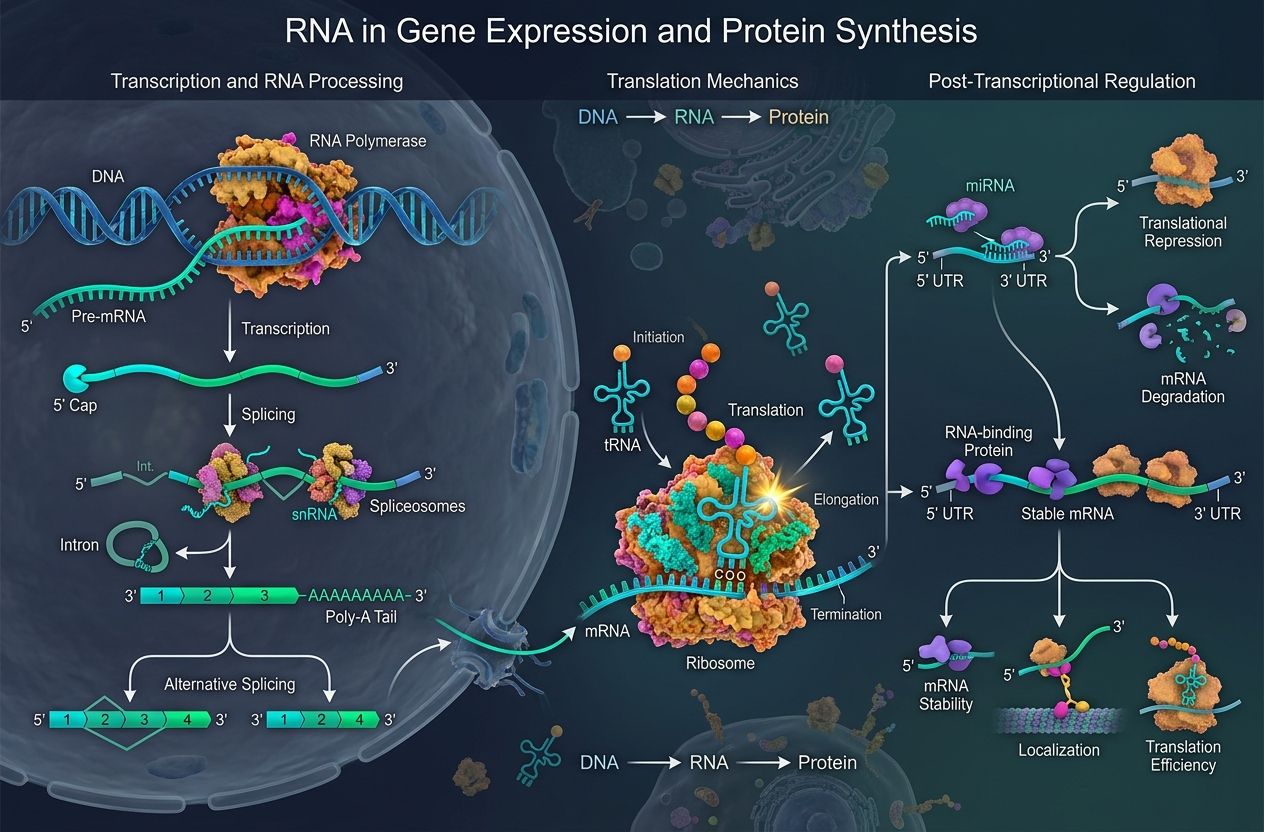
The classical central dogma describes information flow: DNA -> RNA -> Protein. Each step involves RNA in critical ways:
Transcription and RNA processing
Transcription produces a primary RNA transcript (pre-mRNA in eukaryotes) that undergoes 5′ capping, splicing (removal of introns) and 3′ polyadenylation. Alternative splicing allows a single gene to generate multiple mRNA isoforms, increasing proteomic complexity. These processing events are mediated by protein-RNA complexes (spliceosome) in which snRNAs play structural and catalytic roles.
Translation mechanics
Ribosomes read mRNA codons, tRNAs bring amino acids and rRNA catalyzes peptide bond formation. Translation is tightly regulated at initiation, elongation and termination stages — regulation often mediated by RNA sequence elements and RNA-binding proteins.
Post-transcriptional regulation
mRNA stability, localization and translation efficiency are controlled by sequences in untranslated regions (UTRs) and by interactions with miRNAs and RNA-binding proteins. This post-transcriptional control is crucial for rapid cellular responses and developmental programs.
RNA’s role in evolution and early life
The hypothesis of an “RNA world” proposes that early life relied on RNA for both information storage and catalysis before DNA and proteins diversified. RNA’s dual capacity to store information and perform catalytic functions supports this idea. Ribozymes (catalytic RNAs) and the ribosome’s RNA-based active site are consistent with a central evolutionary role for RNA.
Biomedical and technological importance of RNA
The importance of RNA extends to diagnostics, therapeutics and synthetic biology:
- mRNA vaccines: Rapid design and scalability made mRNA vaccines a transformative technology during the COVID-19 pandemic. These vaccines instruct host cells to produce antigenic proteins, eliciting strong immune responses with favorable safety profiles.
- RNA therapeutics: Antisense oligonucleotides, siRNAs and RNA aptamers are used to modulate gene expression, treat genetic diseases and target previously undruggable proteins. Examples include therapies approved for spinal muscular atrophy and familial hypercholesterolemia.
- CRISPR and guide RNAs: Guide RNAs direct CRISPR-Cas nucleases to target DNA sequences for editing, enabling precise genetic manipulation with broad research and therapeutic applications (Nature Reviews on CRISPR).
- Diagnostics: RNA-based detection (RT-PCR, RNA-seq) is fundamental for pathogen identification, gene expression profiling and personalized medicine.
Laboratory methods to study RNA
Students and researchers should be familiar with common RNA techniques:
- RT-PCR and qRT-PCR: detect and quantify specific RNAs.
- RNA sequencing (RNA-seq): provides transcriptome-wide expression profiles.
- Northern blotting: traditional method for RNA size and abundance analysis.
- In situ hybridization: localizes RNA within tissues or cells.
Handling RNA requires care because RNases are ubiquitous; use RNase-free reagents and workflows to preserve integrity.
Clinical and ethical considerations
RNA-based technologies raise important clinical and ethical questions. Efficacy, long-term safety and equitable access are priorities for public health and research communities. Regulatory pathways for RNA therapeutics must balance innovation with robust safety evaluation.
Practical summary for students and early researchers
Key takeaways on the importance of RNA:
- Versatility: RNA serves as information carrier, catalyst and regulator.
- Structural complexity: secondary and tertiary folding underlie function.
- Diversity: mRNA, tRNA, rRNA and many non-coding RNAs contribute to cellular control.
- Biotechnological impact: RNA enables vaccines, gene therapies and molecular diagnostics.
For further reading and primary sources, consult resources from the NCBI, Nature and the World Health Organization.
Conclusion
Recognizing the importance of RNA deepens our understanding of cell biology, evolution and modern medicine. RNA’s structural versatility and functional breadth make it a cornerstone of life sciences research and a foundation for transformative therapies. Whether you are a student, educator or aspiring researcher, a solid grasp of RNA biology is essential for engaging with contemporary molecular biology and biotechnology.