
How speedrunners manage to beat games so quickly is a question that fascinates gamers and developers alike. In this article you’ll find the essence of speedrunning: a blend of precise inputs, clever exploitation of game mechanics, and relentless optimization.
What is speedrunning?
Speedrunning is the practice of completing a video game—or a specific goal within a game—as fast as possible. Runs are usually timed and submitted to leaderboards on sites like speedrun.com. Categories range from any percentage (finish as fast as possible by any means) to 100% (full completion), and many sub-categories define rule sets that shape the runner’s approach.
Core reasons speedrunners can finish games so fast
At a high level, the reasons players shave hours down to minutes are:
- Exploiting glitches to skip content or accelerate progress.
- Sequence breaks—doing tasks out of intended order for advantage.
- Optimized routing that minimizes travel and redundant actions.
- Frame-perfect inputs and mechanical precision.
- RNG manipulation to make favorable outcomes more likely.
- Practice and muscle memory for consistent execution.
- Community knowledge—sharing discoveries and refining techniques.
Techniques and tactics explained
1. Glitches and memory manipulation
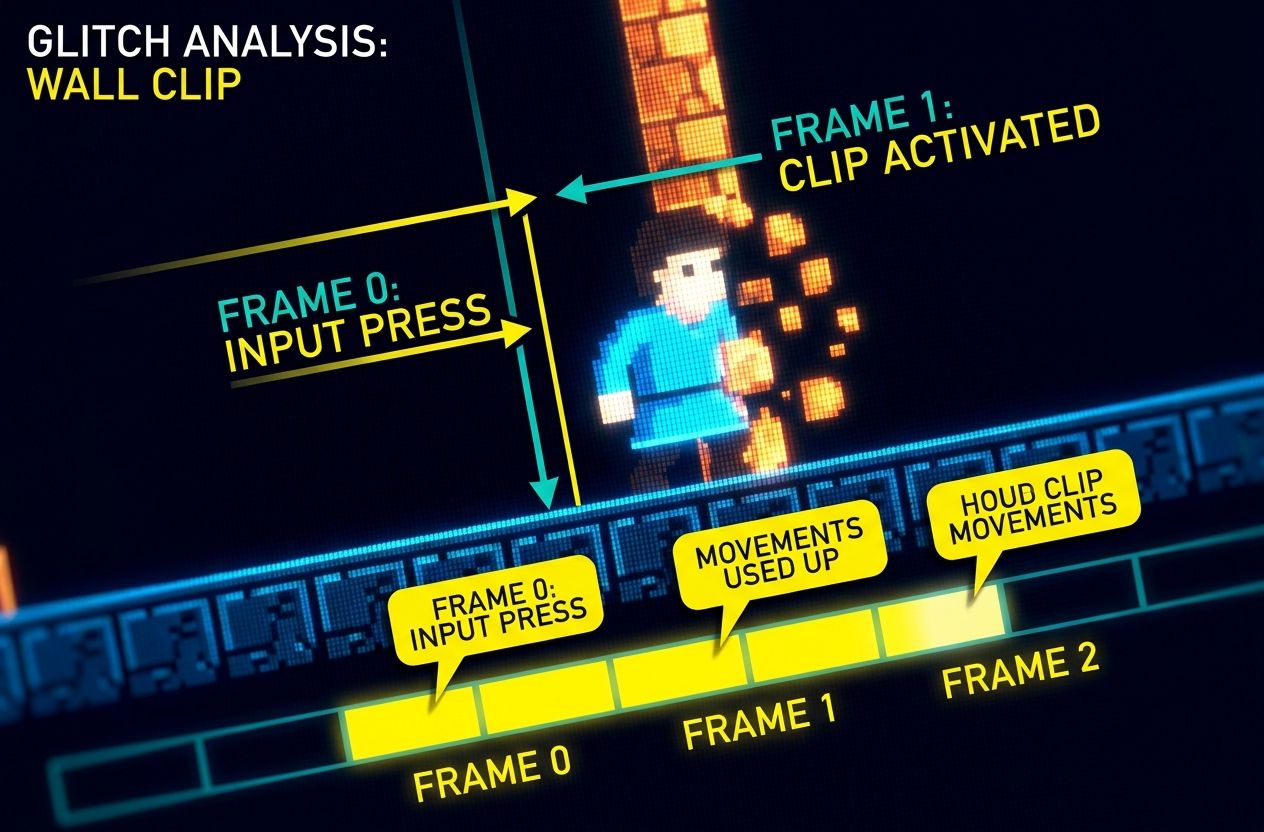
Glitches are unintended behaviors in a game that can be leveraged to skip content or alter state. They range from simple frame skips to complex memory corruption techniques. Examples include clipping through walls, item duplication, or triggering out-of-bounds physics. Some well-known glitch types are:
- Clips: Passing through geometry to skip areas.
- Warp glitches: Causing the game to load a different area or trigger a teleport.
- Memory glitching: Overwriting variables to alter the game’s behavior (common in older consoles).
These glitches often come from deep analysis of engine behavior or trial-and-error testing. Runners and researchers use debugging tools, emulators, and disassembly to understand exactly why a glitch happens and how to exploit it reliably.
2. Sequence breaks
Sequence breaking involves completing objectives in an order not intended by the developers to gain an advantage. It’s different from pure glitches because it can be achieved by clever gameplay without breaking the engine. For instance, skipping a required item by using new movement tech allows a runner to access late-game areas early and complete objectives sooner.
3. Routing and optimization
Routing is planning the fastest path through the game given the allowed techniques. It integrates movement speed, enemy encounters, puzzle solutions, and resource management. Effective routing considers:
- Shortest pathing: Minimizing travel distance and backtracking.
- Action economy: Reducing the number of actions needed to achieve goals.
- Resource timing: Using items or abilities at moments that save time overall.
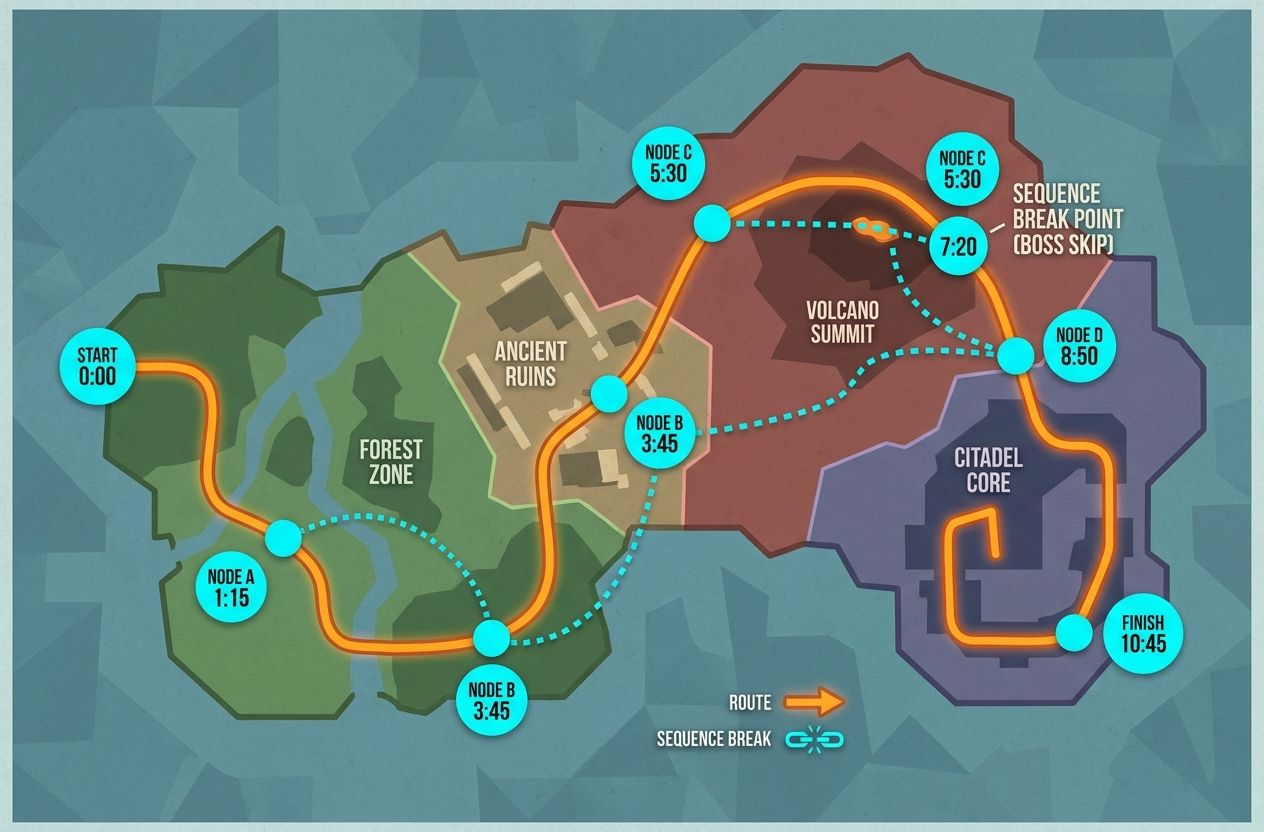
Runners often use split timers (e.g., LiveSplit) to compare segments and track where time can be saved. Community-run spreadsheets, route maps, and video analysis help refine routes over months and years.
4. Frame-perfect inputs and mechanical mastery
Many speedruns depend on frame-perfect inputs—actions that must occur within a single frame (or a few frames) to succeed. Humans train to consistently hit these inputs, but some tasks are so precise that runners practice specific muscle memory drills, use custom controllers, or adjust display settings to reduce input lag.
Tools like slow-motion replay, frame advance in emulators, and TAS recordings help runners learn the exact timing. Then they practice until the movement becomes consistent under race pressure.
5. RNG manipulation and soft-reset strategies
Random Number Generation (RNG) can determine enemy behavior, item drops, or level layouts. Runners learn to manipulate RNG by controlling in-game variables—moving in exact ways, waiting particular amounts of time, or using deterministic inputs—to produce favorable outcomes. When a run’s RNG is unfavorable, runners often use soft resets (restarting quickly) until a good RNG seed appears.
6. Tool-Assisted Speedruns (TAS) vs. Real-Time Attack (RTA)
TAS runs use emulators and frame-by-frame inputs to create theoretically perfect runs. TAS is invaluable for discovering new optimizations, glitches, or impossible sequences. However, community leaderboards typically separate TAS and RTA (real-time) runs. While TAS showcases potential, RTA demonstrates human-executable skill and consistency.
Practice, verification and the role of the community
Beyond technique, two social factors enable speedrunning advancement: community collaboration and rigorous verification.
- Knowledge sharing: Runners post discoveries on forums, Discords, and YouTube. A single new glitch shared publicly can lead to a flurry of new routes and records.
- Verification standards: Leaderboards and events enforce rules—video proof, specific categories, and moderators—to ensure fairness. This structure incentivizes reproducibility and clarity.
Communities also coordinate marathons (e.g., Games Done Quick) that highlight both the skill and the cooperative spirit of the scene, while raising funds for charity.
Common questions beginners ask
How do I start speedrunning?
Pick a game you love, choose a simple category (often any percentage or a single-segment challenge), and learn the basic route. Use resources like speedrun.com for guides and leaderboards, and join the game’s Discord to ask for tips. Start timing early—practice segments, not just full runs.
Do I need glitches to be good?
No. Many competitive runs use few or no glitches. However, understanding glitches broadens what’s possible and can inspire creative routing. If you prefer clean play, explore glitchless categories.
How important is hardware?
Hardware matters for input latency and consistency. High-refresh monitors, low-latency controllers, and consistent frame rates help. That said, skill and routing usually trump gear—many records were set on original consoles or modest PCs.
Is speedrunning legal or ethical?
Yes—speedrunning is a legitimate form of play and discovery. The community generally respects developer IP; many runners communicate with creators, and some developers embrace speedruns or even integrate them into patches and challenges. Ethical considerations mainly focus on honesty in submissions and respect for other players’ records.
Practical tips to improve quickly
- Segmented practice: Break runs into segments and grind troublesome parts.
- Record and review: Film practice runs to spot mistakes and analyze decision points.
- Lean on community resources: Use route guides, tutorials, and ask veterans for feedback.
- Focus on consistency: A steady pace with fewer mistakes often beats sporadic, flashy plays.
- Learn to reset: Soft-resetting intelligently saves time overall in RNG-heavy games.
Why speedrunning matters for games and design?
Speedrunning uncovers hidden mechanics and boundary behaviors that help developers understand emergent gameplay. Many designers study speedrun discoveries to harden bugs or to intentionally enable interesting emergent techniques. Beyond bug-fixing, speedrunning fosters a passionate audience that keeps older games alive and creates new ways to enjoy them.
Conclusion
In short, how speedrunners manage to beat games so fast is a mix of technical mastery, creative exploitation of mechanics, disciplined practice, and vibrant community collaboration. Whether you’re a curious viewer or an aspiring runner, there’s a clear path in: pick a game, learn the basics, and start shaving seconds—one optimization at a time.