Classic games have a unique ability to evoke memories, influence design, and shape entire communities. In this deep dive, we examine ten titles from different generations that left lasting marks on the gaming landscape — why they mattered at launch, what innovations they introduced, and how they continue to resonate today.
Why classic games still matter?
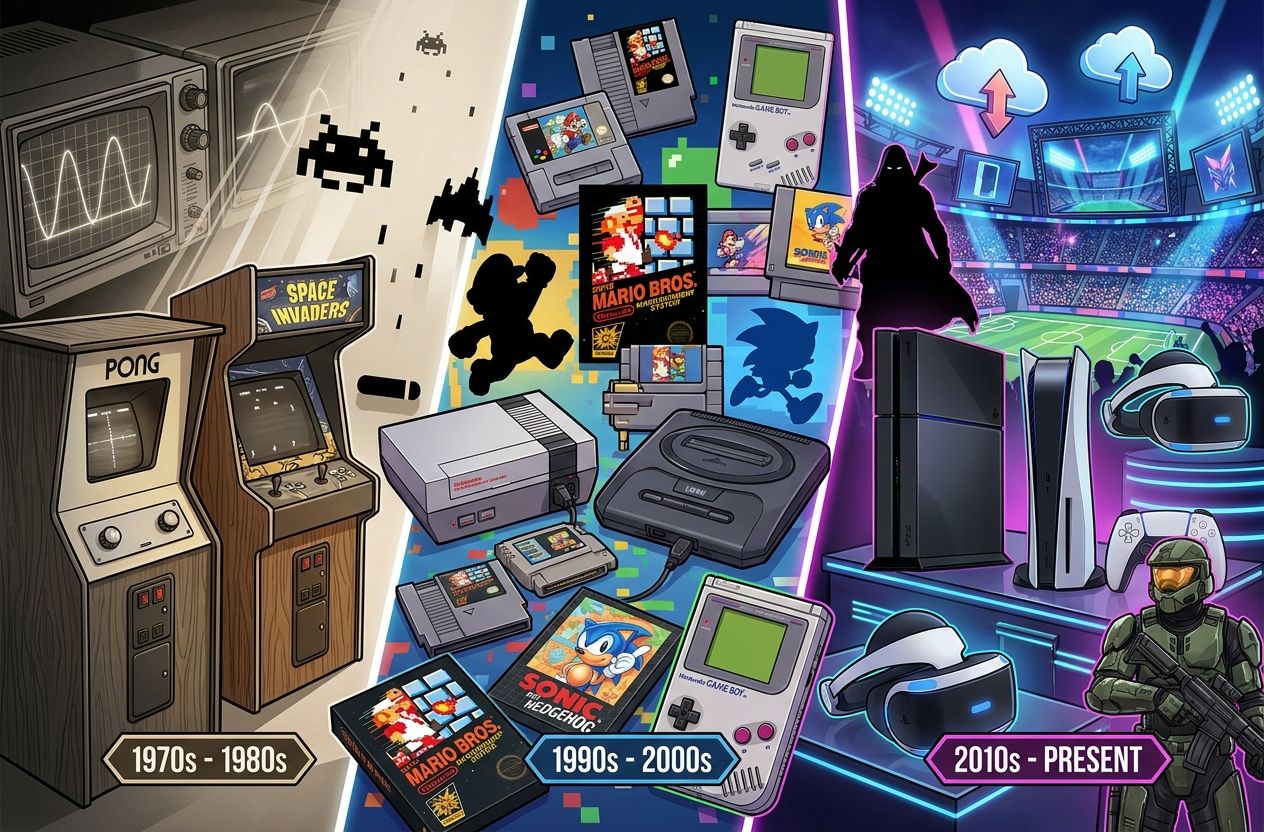
From arcade cabinets to home consoles and PC, classic titles forged genres, pioneered mechanics, and created franchises that endure. Understanding these games illuminates gaming’s evolution and helps explain modern design trends, esports, streaming, and collector culture. Whether you’re a nostalgic veteran or a curious newcomer, this list highlights the historical milestones that built today’s industry.
Top 10 classic games that influenced generations
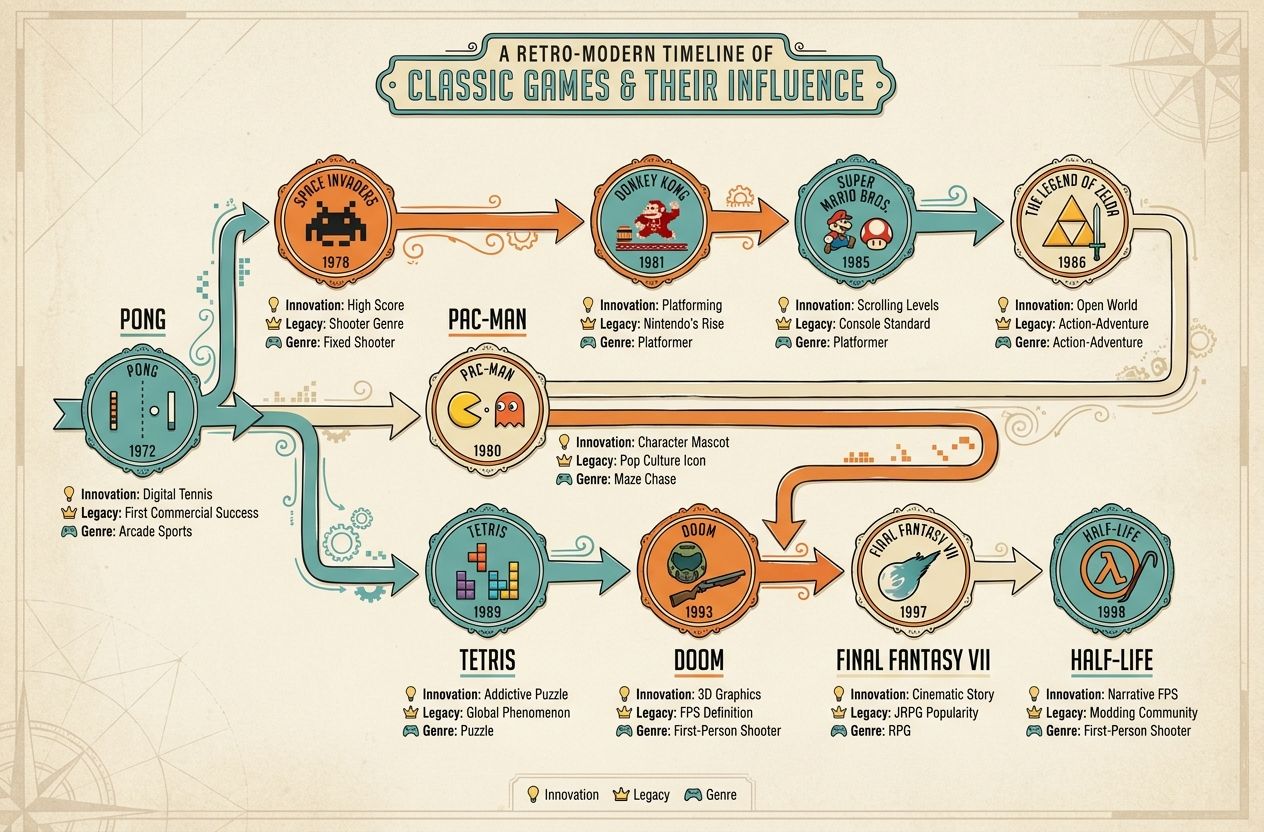
1. Pong (1972)
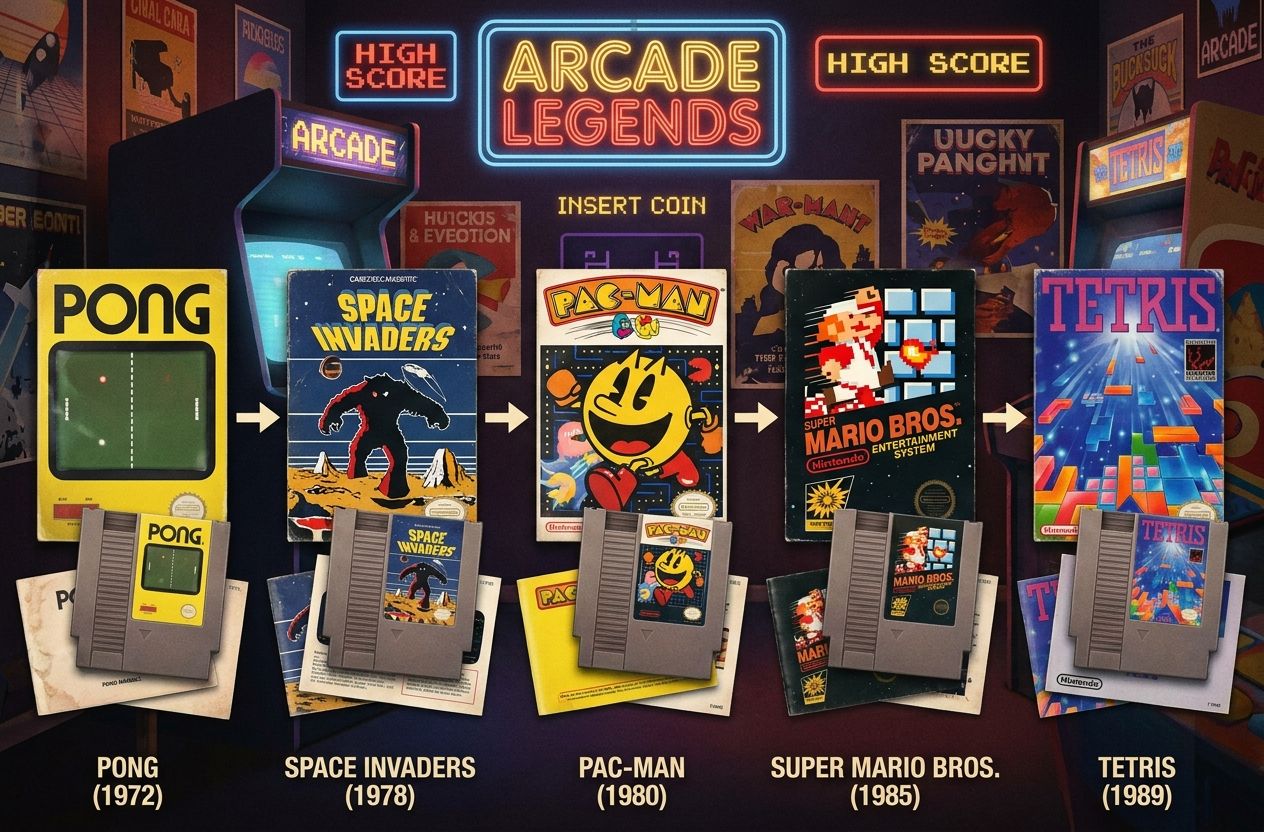
Historical importance: Often cited as the first commercially successful video game, Pong brought interactive entertainment into arcades and later homes.
Innovation: Simple yet addictive gameplay proved that electronic games could be mass-market entertainment. Pong’s success demonstrated the viability of arcade cabinets and early console concepts.
Legacy: Pong inspired a wave of arcade competitors and laid groundwork for user-friendly game mechanics and local multiplayer experiences.
Relevance today: Its minimalist design remains a study case in game design courses; modern indie titles often celebrate Pong’s emphasis on clarity and immediacy. See more: Wikipedia – Pong.
2. Space Invaders (1978)
Historical importance: Space Invaders was a cultural phenomenon that boosted arcade growth and influenced the shooter genre.
Innovation: The game introduced progressive difficulty and high-score competition — vital hooks for repeated play.
Legacy: Its iconic imagery and sound design permeated pop culture, inspiring countless clones and shooter conventions.
Relevance today: Retro re-releases and homages persist, and the game’s looped tension is echoed in modern wave-based shooters. Reference: Wikipedia – Space Invaders.
3. Pac-Man (1980)
Historical importance: Pac-Man broadened gaming’s audience by appealing to women and families, helping shift video games from niche to mainstream.
Innovation: Non-violent, character-driven gameplay and memorable mascots made Pac-Man a marketing and merchandising powerhouse.
Legacy: Its level design, enemy AI patterns, and cultural iconography influenced branding strategies across the industry.
Relevance today: Pac-Man remains an archetype for character-based arcade design and cross-media merchandising. More: Wikipedia – Pac-Man.
4. Super Mario Bros. (1985)
Historical importance: Released on the NES, Super Mario Bros. helped revive the home console market after the 1983 crash and established platformers as a dominant genre.
Innovation: Tight controls, inventive level design, and a clear sense of progression set new standards for gameplay feel and polish.
Legacy: Mario became Nintendo’s flagship franchise; the game’s influence extends to level design theory, pacing, and tutorial-free learning by play.
Relevance today: Nintendo continues to iterate on Mario’s design, and the original remains a benchmark in how mechanics and level layout teach players. See: Wikipedia – Super Mario Bros..
5. Tetris (1984)
Historical importance: Tetris transcended platforms and cultures, becoming a universal puzzle phenomenon from Soviet developers to global markets.
Innovation: Elegant, emergent gameplay from simple rules produced deep strategy and universal appeal.
Legacy: Tetris defined puzzle games and demonstrated that games could be portable, timeless, and appeal to diverse audiences.
Relevance today: Countless versions exist across devices, and Tetris remains a model for addictive, low-barrier gameplay. Read more: Wikipedia – Tetris.
6. The Legend of Zelda (1986)
Historical importance: Zelda introduced expansive exploration and non-linear progression to console audiences, marrying adventure and action with an emergent world.
Innovation: Save systems, open-world exploration, and an emphasis on discovery reshaped expectations for console RPGs and action-adventure titles.
Legacy: Zelda influenced open-world design, item-based progression, and environmental storytelling.
Relevance today: Modern open-world games, including recent entries in the Zelda franchise, still build on ideas first popularized here. Source: Wikipedia – The Legend of Zelda.
7. Doom (1993)
Historical importance: Doom popularized the first-person shooter (FPS) and multiplayer deathmatch, catalyzing PC gaming culture.
Innovation: Fast-paced 3D-like graphics, mod-friendly architecture, and networked multiplayer fostered rich communities and mod ecosystems.
Legacy: Doom’s engine inspired countless games and helped shape FPS mechanics, level design, and modding as pillars of PC gaming.
Relevance today: The game’s lasting community and modern reboots show how foundational Doom’s design was for competitive and single-player shooters. Further reading: Wikipedia – Doom (1993).
8. Final Fantasy VII (1997)
Historical importance: Final Fantasy VII brought cinematic storytelling and blockbuster production values to console RPGs, attracting mainstream attention particularly in the West.
Innovation: Deep narrative, memorable characters, and cinematic cutscenes elevated expectations for storytelling in games.
Legacy: It cemented JRPGs as a global genre and influenced narrative-driven design across many studios.
Relevance today: The game’s remake and sustained fanbase highlight how narrative depth and character design endure. See: Wikipedia – Final Fantasy VII.
9. Pokémon Red & Blue (1996/1998)
Historical importance: Pokémon introduced a social and collection-based loop powered by trading and multiplayer battles, becoming a cross-media empire.
Innovation: Combining collecting, battling, and social features (trading link cables) made the franchise uniquely social and persistent.
Legacy: Pokémon proved that media franchises built around games could dominate toy shelves, TV, and mobile apps.
Relevance today: From mobile hits like Pokémon Go to new mainline titles, the series’ core loop remains one of gaming’s most influential designs. More: Wikipedia – Pokémon Red and Blue.
10. Minecraft (2009)
Historical importance: Although newer than other entries, Minecraft’s impact across generations qualifies it as a modern classic: it democratized content creation and open-ended play.
Innovation: Procedural worlds, sandbox mechanics, and user-generated content empowered players to build, mod, and share massive creations.
Legacy: Minecraft influenced survival, builder, and sandbox genres and became a cornerstone of educational gaming and streaming culture.
Relevance today: Active modding communities, educational adoption, and persistent player bases show Minecraft’s cross-generational reach. Reference: Wikipedia – Minecraft.
Common threads across these classics
- Accessibility: Many classics introduced mechanics that were easy to learn but hard to master.
- Replayability: High-score chasing, emergent gameplay, or procedural generation kept players returning.
- Community and culture: From arcade hotspots to online modding hubs, communities amplified these titles’ impact.
- Design clarity: Strong feedback loops, clear goals, and memorable aesthetics made these games timeless.
How to experience these games today
Many classics are accessible via official remasters, retro consoles, or legal emulation services. Consider purchasing re-releases from platform stores, trying modern remakes, or exploring curated collections from Nintendo, Sony, Microsoft, and PC storefronts. When using historical sources, prefer reputable archives like IGN or museum projects that preserve gaming history responsibly.
Conclusion
The ten classic games highlighted here shaped the way generations play, design, and think about games. They represent milestones in mechanics, storytelling, community building, and business models. For nostalgic gamers and newcomers alike, revisiting these titles provides both pleasure and insight into how the medium evolved. Whether you’re analyzing design, collecting cartridges, or simply reliving childhood memories, these classics remain touchstones of gamer culture.
Further reading: For deep dives into specific eras, consult academic and journalistic resources such as the Video Game History Foundation (gamehistory.org) and curated retrospectives on major outlets.