How the roguelike genre originated is a question that takes us back to the late 1970s and early 1980s, when computer limitations, procedural systems and emergent gameplay combined to create a distinctive style still influential today. This article explores the genre’s origins, key games, technical and design characteristics, and the ways indie developers have kept the spirit alive.
The context for a new genre
The story of roguelikes begins in a computing era defined by limited graphics, small storage and time-shared terminals. Developers experimented with text-based displays and procedural generation to create unpredictable, replayable experiences. From these constraints emerged a set of recurring design principles—procedural dungeons, permadeath, turn-based combat and emergent storytelling—that would coalesce into what players and critics now call the roguelike genre.
Early roots: The immediate precursors
Understanding how the roguelike genre originated requires looking at its technical and cultural precursors:
- Text-based adventures and wargames: Early computer games like Zork (1977) and various strategy wargames introduced complex systems and player-driven problem solving.
- Roguelike mechanics from tabletop RPGs: Dungeons & Dragons influenced procedural dungeon design, inventory management and resource scarcity—core elements later adopted in digital roguelikes.
Rogue (1980): The canonical starting point
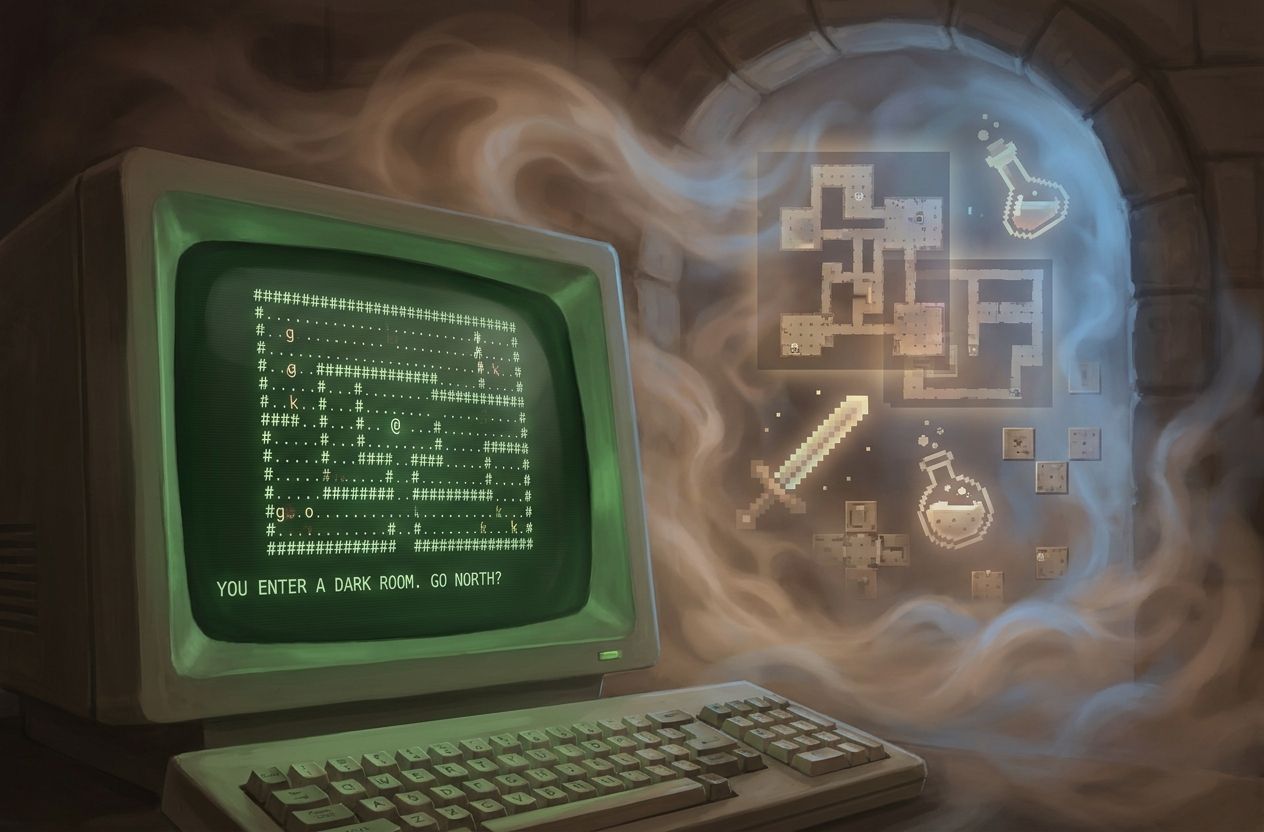
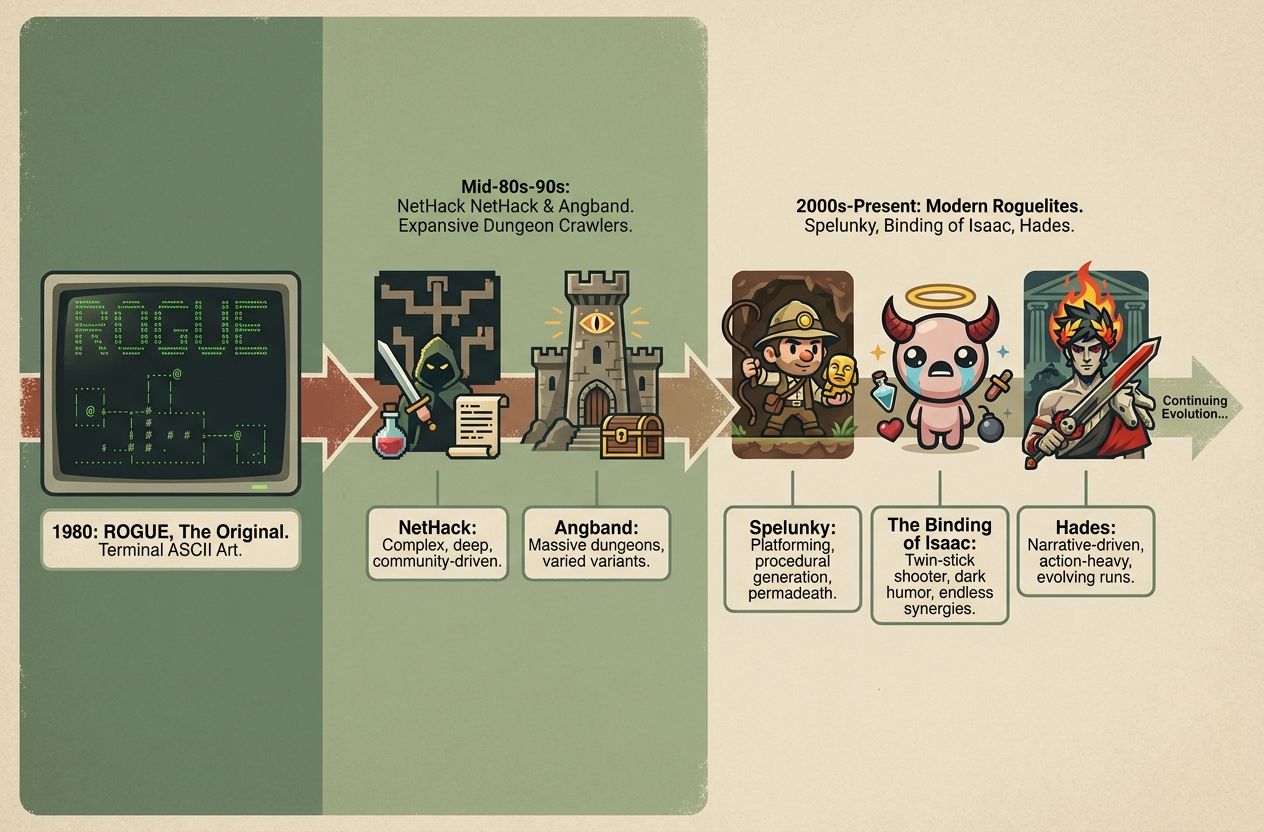
Rogue, developed by Michael Toy and Glenn Wichman circa 1980 (and later refined with Ken Arnold), is widely credited as the original spark. Created for Unix systems and distributed via early networks and bulletin boards, Rogue combined several innovations:
- Procedurally generated dungeon levels, ensuring each run felt unique.
- Permadeath, which made decisions meaningful and runs tense.
- Turn-based movement and ASCII graphics that turned text characters into a readable game world.
Rogue’s influence spread through university sites and the emergent Unix community. You can read more about Rogue on Wikipedia and historical write-ups like those on developer retrospectives.
The branching tree: NetHack, Moria and ADOM
After Rogue, several projects took the design further. Each added complexity, variety and longevity—shaping what players expected from the genre.
NetHack (1987–)
NetHack evolved from Hack (a Rogue variant) into a sprawling, feature-rich game with deep item interactions, unique levels and a famously eccentric development philosophy: “The DevTeam thinks of everything.” NetHack emphasized discovery and experimentation, with thousands of possible interactions between items, monsters and environments. More at NetHack (Wikipedia).
Moria and Angband
Moria and its descendant Angband focused on scale—larger dungeons and long-term gear progression inspired by Tolkien’s works. These games introduced persistent progression and sprawling item ecosystems that appealed to players seeking longer-term goals within the permadeath framework.
ADOM and others
Titles like ADOM (Ancient Domains of Mystery) blended roguelike mechanics with richer narratives and class systems, foreshadowing hybrid experiences that balance permadeath with world-building.
Defining characteristics of roguelikes
When players ask how the roguelike genre originated, they often want to know what sets a roguelike apart. The classic “Berlin Interpretation” (2008) attempted to codify these traits; core features commonly cited include:
- Procedural generation: Levels, item placement and monster encounters are algorithmically created, ensuring variety between runs.
- Permadeath: Permanent character death resets progress, making each decision significant.
- Turn-based gameplay: Players and monsters act in discrete turns, allowing careful tactical play.
- Grid-based movement: Movement and positioning on a grid are central to combat and exploration.
- Complex systems and item interactions: Deep, sometimes opaque interactions encourage experimentation and knowledge transfer across runs.
- High difficulty and emergent storytelling: The combination of procedural systems and permadeath leads to memorable, player-driven narratives.
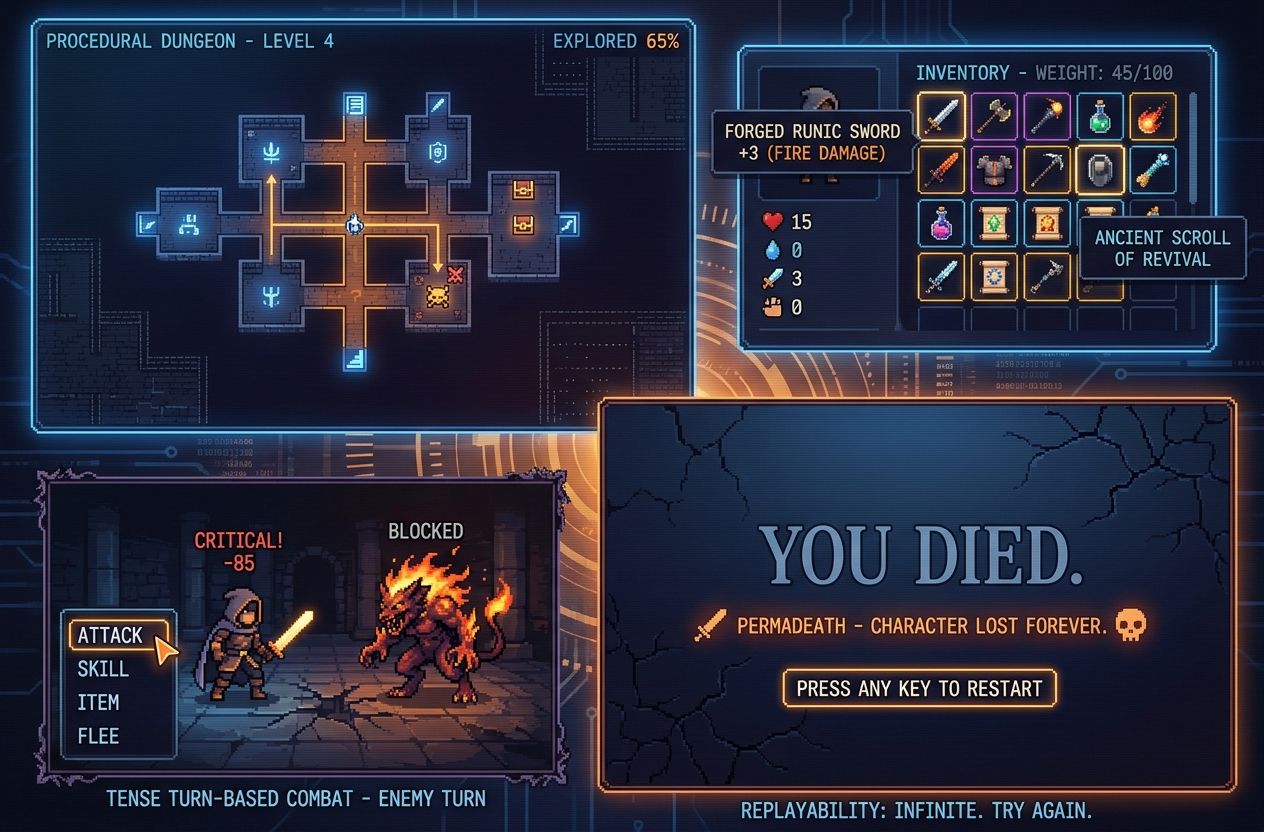
These characteristics are guidelines rather than strict rules. Many modern games borrow some but not all of these features, creating the diverse family of “roguelikes” and “roguelites” we see today.
The semantic split: Roguelike versus Roguelite
As the genre evolved, developers and players introduced qualifiers. The term “roguelike” traditionally refers to games closely following the Berlin Interpretation, while “roguelite” describes games that incorporate procedural generation and permadeath elements but add persistent progression or real-time action.
- Roguelike examples: NetHack, ADOM, Angband—older titles emphasizing depth and turn-based tactics.
- Roguelite examples: Spelunky, The Binding of Isaac, Hades—modern, high-profile games that mix genres and accessibility improvements.
Both traditions trace back to the question of how the roguelike genre originated—they share roots in procedural systems and emergent difficulty, but have diverged in emphasis and design goals.
Key milestones and timeline
- 1970s: Text adventures and early procedural experiments set groundwork.
- 1980: Rogue released and spreads through academic networks.
- 1980s–1990s: Hack → NetHack, Moria → Angband, ADOM and other variants expand complexity.
- 2000s: Community-driven preservation, online repositories like RogueTemple and Fan projects maintain the canon.
- 2008: “Berlin Interpretation” attempts to define roguelike traits.
- 2008–present: Roguelikes influence indie hits—Spelunky (2008/2012), The Binding of Isaac (2011), FTL (2012), and Hades (2018)—bringing procedural permadeath to mainstream audiences in varied forms.
Design lessons from the genre
Roguelikes teach several durable design principles valuable to modern game development:
- Design for replayability through procedural content rather than handcrafted repetition.
- Encourage emergent play by creating interacting systems rather than scripted events.
- Balance risk and reward so permadeath feels fair and compelling.
- Support player learning with clear feedback, discoverable mechanics and optional meta-progression.
Modern revival and indie innovation
Indie developers have been central to the roguelike revival. By mixing old-school systems with modern design sensibilities—polished UI, varied pacing, and optional persistence—games like Spelunky and The Binding of Isaac expanded the audience and vocabulary of roguelike design. Hades blended narrative persistence with roguelite mechanics to critical and commercial success, demonstrating how the core ideas born in Rogue remain adaptable.
Canonical games to study
- Rogue (1980) — the origin point.
- NetHack (1987–) — deep simulation and item complexity.
- Angband — large-scale dungeon crawling.
- ADOM — narrative-driven roguelike.
- Spelunky, The Binding of Isaac, FTL, Hades — modern evolutions and hybrids.
Practical advice for indie developers
If you’re an indie developer inspired by the question of how the roguelike genre originated and want to create a game in the tradition, consider these steps:
- Start with strong core systems: combat, item interactions and meaningful choices.
- Implement procedural generation iteratively: begin with simple room layout algorithms and expand toward emergent level composition.
- Design for death as part of the experience: ensure permadeath supports discovery rather than frustration—use meta-progression sparingly.
- Prioritize clarity: roguelikes can become opaque; provide feedback, logs or optional tutorials to ease new players in.
Further reading and sources
For deeper study, consult canonical and community sources:
Conclusion
Answering how the roguelike genre originated reveals a history shaped by technical limits, creative problem solving and communities of players and developers who valued replayability and emergent challenge. From the humble ASCII dungeons of Rogue to today’s narrative-rich and mechanically diverse roguelites, the genre’s core ideas endure: systems that interact, consequences that matter, and stories that emerge from play. Whether you are a player, designer or historian, the roguelike tradition offers rich lessons in procedural design and the art of making meaningful replayable challenges.
Recommended next step: Try a classic (NetHack or ADOM) and a modern roguelite (Spelunky or Hades) to feel both the origins and evolution of the genre.