The function of DNA is to store and transmit the genetic instructions that guide the development, functioning and reproduction of all living organisms. This article explains, in clear and accessible language, how DNA’s molecular structure and composition enable it to carry complex information reliably across generations.
Introduction
The function of DNA underpins modern biology. From basic cell function to heredity and evolution, DNA is central to life. Understanding DNA’s architecture, the nucleotides that compose it and the processes that read and copy it gives students and professionals a solid foundation for genetics, medicine and biotechnology.
What is DNA?
DNA (deoxyribonucleic acid) is a long polymer found in the cells of all living organisms and many viruses. It is the molecule that stores the instructions — the genetic code — used to build and maintain an organism. While the general role of DNA is universal, the exact sequences and organization differ between species and individuals, producing biological diversity.
DNA structure: the double helix
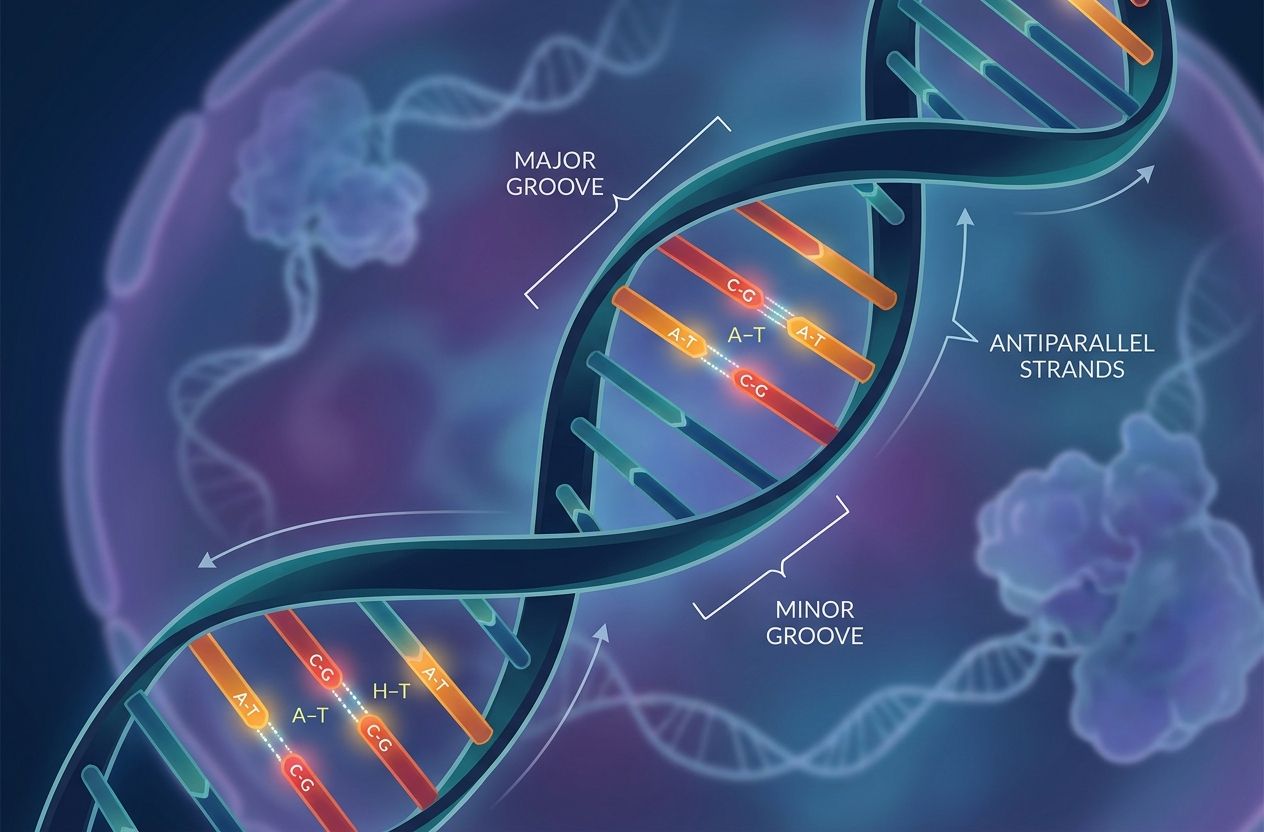
The classic image of DNA is the double helix, a twisted ladder-like structure first described by James Watson and Francis Crick in 1953. Key features of this structure include:
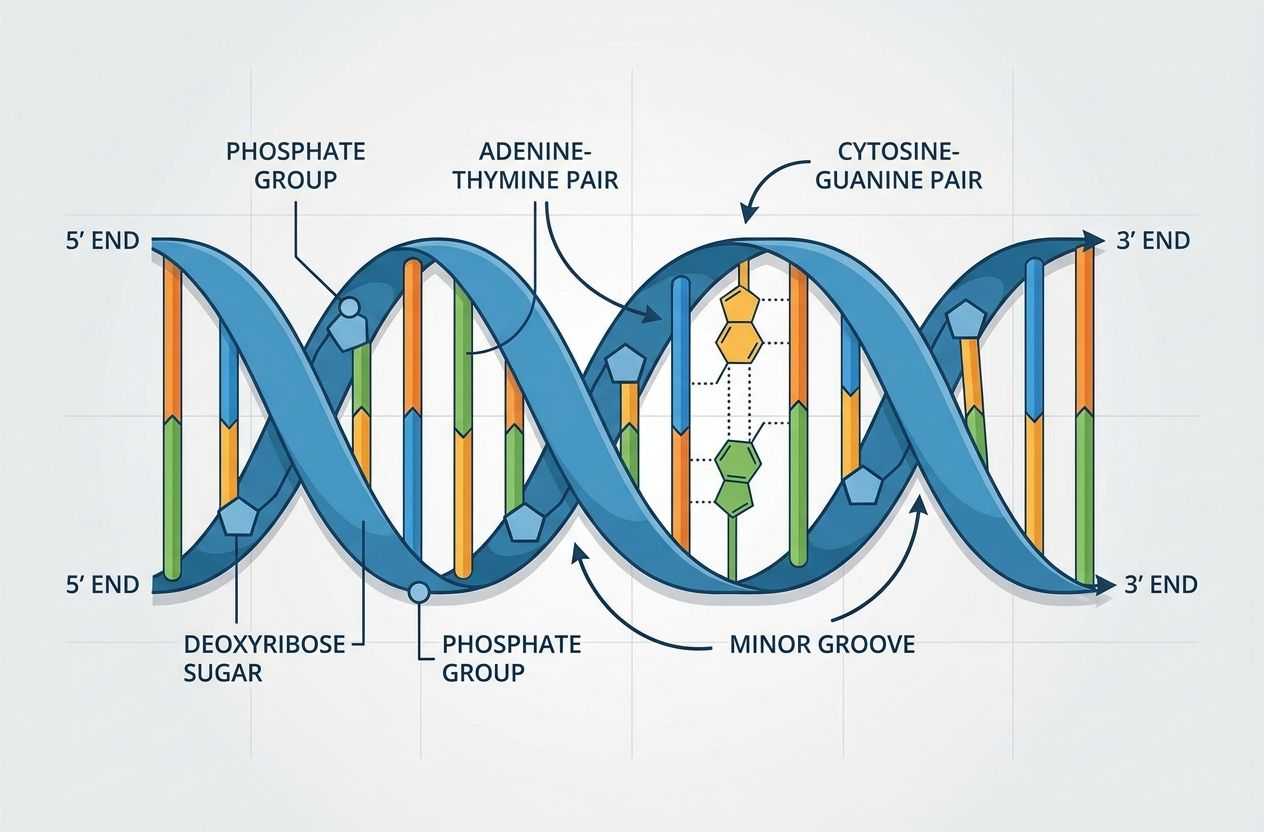
- Two complementary strands: Each strand is a backbone of alternating sugar (deoxyribose) and phosphate groups.
- Base pairs: The rungs of the ladder are pairs of nitrogenous bases — adenine (A) pairs with thymine (T), and cytosine (C) pairs with guanine (G) — held together by hydrogen bonds.
- Antiparallel orientation: The two strands run in opposite directions (5′ to 3′ and 3′ to 5′), which is crucial for replication and enzymatic interactions.
- Major and minor grooves: Surface features that allow proteins (like transcription factors) to recognize specific sequences without separating the strands.
Why the double helix supports information storage
The double helix structure is ideal for information storage because:
- Complementarity ensures accurate copying: each base on one strand dictates its partner on the new strand.
- Stability and compactness allow long sequences to be packaged in chromosomes inside cell nuclei.
- Redundancy and repair: Having two complementary strands provides templates for repairing damage.
Molecular components of DNA
DNA is built from repeating units called nucleotides. Each nucleotide contains three parts:
- A phosphate group that links sugars between adjacent nucleotides to form the backbone.
- A five-carbon sugar (deoxyribose) that connects to both the phosphate and the base.
- A nitrogenous base (A, T, C or G) that encodes information through its sequence.
The sequence of these bases along a DNA strand is the primary carrier of genetic information. Small chemical differences between bases, sugar and phosphate chemistry give DNA both chemical stability and the ability to interact with proteins and enzymes that read and copy it.
How DNA stores genetic information
The function of DNA in storage relies on the arrangement of bases into meaningful units and regions:
- Genes: Segments of DNA that contain instructions for making RNA and proteins. A typical gene includes coding regions (exons), regulatory sequences and noncoding introns (in eukaryotes).
- Regulatory elements: Promoters, enhancers and silencers control where, when and how much a gene is expressed.
- Noncoding DNA: Many sequences do not encode proteins but have structural, regulatory or unknown roles (e.g., telomeres, centromeres, noncoding RNAs).
The genetic code translates nucleotide sequences into amino acids via codons — groups of three bases that specify a particular amino acid or stop signal during translation. This mapping from DNA to protein is nearly universal across life, reflecting shared evolutionary heritage.
Information density and redundancy
DNA encodes vast amounts of information in a compact form. Human cells contain about 3 billion base pairs per haploid genome; combined across cells and chromosomal packaging, this yields remarkable data density. Yet the system also includes redundancy: multiple codons can encode the same amino acid (codon degeneracy), and diploid organisms carry two copies of most genes, which can buffer the effects of harmful mutations.
DNA replication and transmission of genetic information
An essential aspect of DNA’s role is faithful transmission to daughter cells and offspring. DNA replication is the biochemical process that copies a cell’s genome before cell division. Key steps include:
- Initiation: Origin recognition and strand separation by helicases.
- Primer synthesis: Short RNA primers are made by primase to provide starting points for DNA polymerases.
- Elongation: DNA polymerases synthesize new strands complementary to templates; leading and lagging strands are produced differently due to antiparallel orientation.
- Proofreading and repair: Polymerases and repair enzymes correct errors to maintain fidelity.
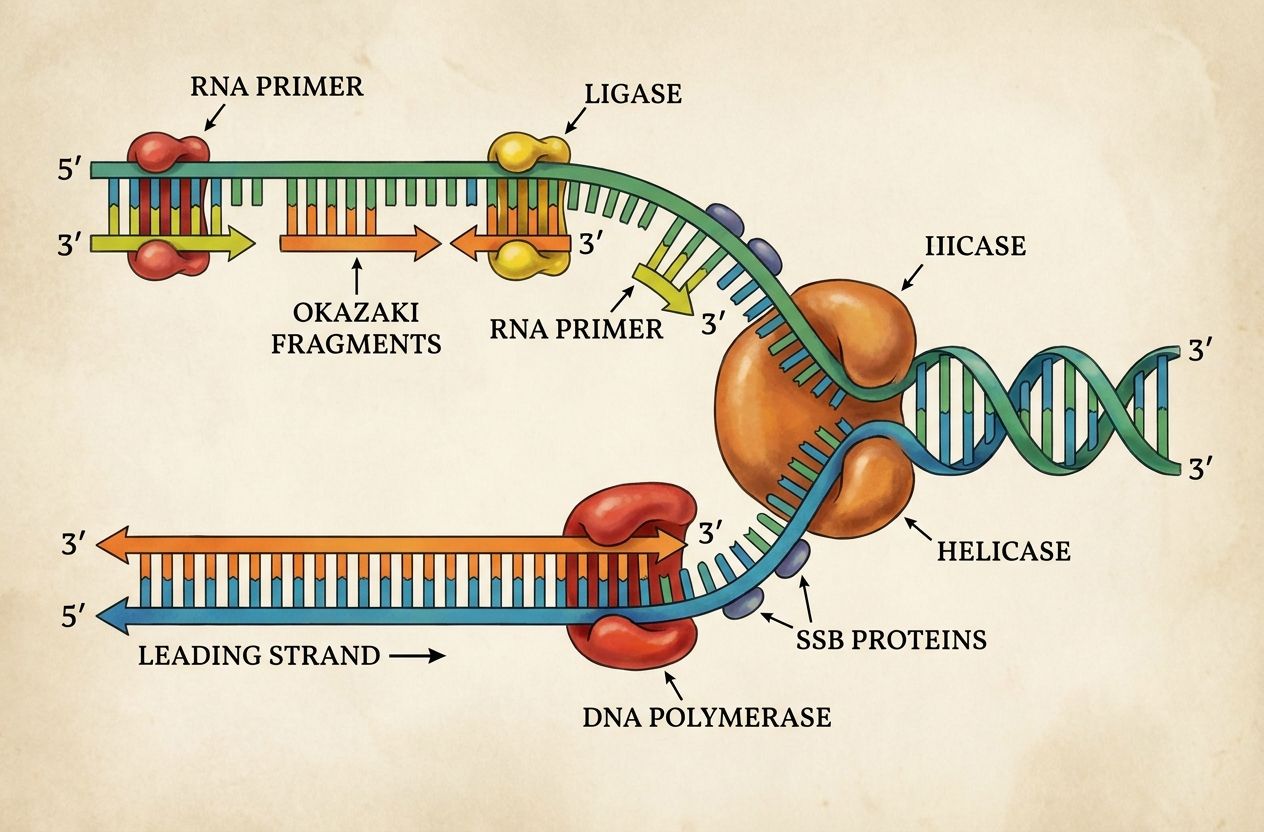
Errors in replication can lead to mutations. While many mutations are neutral or harmful, some provide material for evolution. Mechanisms such as mismatch repair, nucleotide excision repair and homologous recombination act to fix diverse types of DNA damage.
From DNA to phenotype: transcription and translation
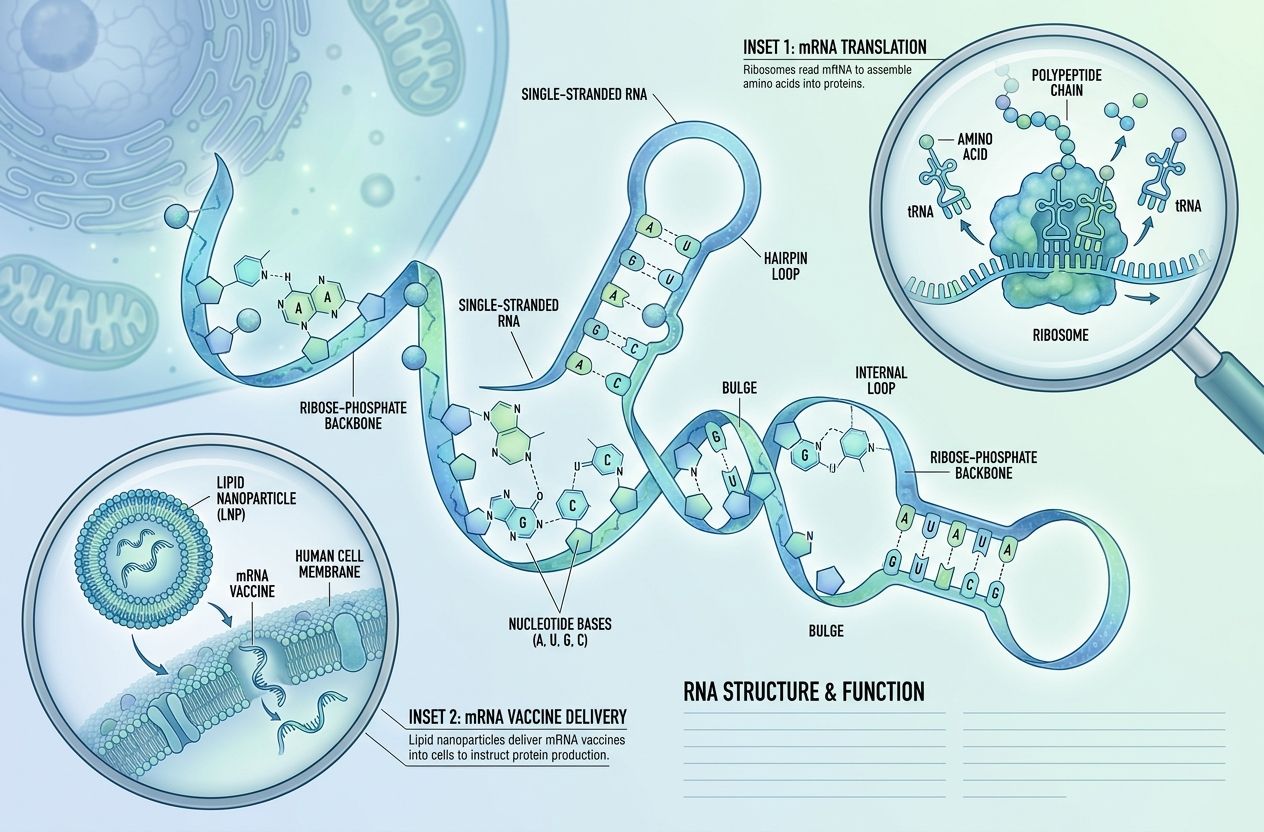
The flow of genetic information follows a central dogma: DNA -> RNA -> Protein. The function of DNA manifests through its ability to be transcribed into RNA and translated into proteins, which perform cellular functions.
- Transcription: RNA polymerase reads a DNA template to synthesize messenger RNA (mRNA), which carries coding information to ribosomes.
- RNA processing (in eukaryotes): splicing, 5′ capping and polyadenylation produce mature mRNA.
- Translation: Ribosomes read mRNA codons to assemble amino acids into polypeptides; tRNAs and translation factors ensure accuracy.
Proteins produced by translation determine cellular structure, catalyze biochemical reactions, regulate gene expression and mediate interactions with the environment. Thus, DNA indirectly shapes phenotype via the molecules it encodes.
Why DNA’s function matters: medical and practical implications
Understanding DNA’s role is vital in many fields:
- Medicine: Genetic mutations cause many inherited disorders and contribute to cancer. Genomic knowledge enables diagnostics, targeted therapies and personalized medicine.
- Biotechnology: Techniques like PCR, gene cloning, CRISPR and sequencing rely directly on manipulating DNA.
- Forensics and ancestry: DNA profiling identifies individuals and reveals population history.
- Conservation and agriculture: Genetic information guides breeding, conservation planning and biodiversity studies.
Reliable external resources for further reading include the National Center for Biotechnology Information (NCBI), Khan Academy’s genetics tutorials (Khan Academy) and educational modules from HHMI BioInteractive (HHMI).
Key laboratory techniques to study DNA
Common methods that reveal DNA’s structure and function include:
- Polymerase Chain Reaction (PCR) — amplifies specific DNA regions for study.
- DNA sequencing — reads the order of bases; next-generation sequencing enables whole genomes to be sequenced rapidly.
- Gel electrophoresis — separates DNA fragments by size for analysis.
- CRISPR-Cas systems — enable precise genome editing to test gene function.
Common misconceptions
- “DNA contains all the information for a trait” — Not entirely. Environment, epigenetics and gene interactions often influence traits in addition to DNA sequence.
- “One gene = one protein” — Alternative splicing and post-translational modifications mean one gene can give rise to multiple functional products.
- “Mutations are always harmful” — Many mutations are neutral; some are beneficial and drive adaptation over time.
Practical study tips for students
To master concepts about the function of DNA:
- Visualize the double helix and practice drawing nucleotides, base pairs and directionality (5′ vs 3′).
- Work through examples of transcription and translation, translating DNA sequences into amino acid chains.
- Use interactive resources (e.g., HHMI, Khan Academy) to reinforce learning.
Conclusion
The function of DNA — storing, replicating and guiding the expression of genetic information — is central to biology. DNA’s elegant molecular design and the cellular systems that read and maintain it allow living organisms to grow, reproduce and evolve. For students and professionals, a clear grasp of DNA structure, composition and mechanisms provides a foundation for deeper study in genetics, medicine and biotechnology.
Further reading: Watson J.D. & Crick F.H.C., the original papers and reviews on DNA structure; NCBI resources and modern textbooks on molecular biology provide more depth.