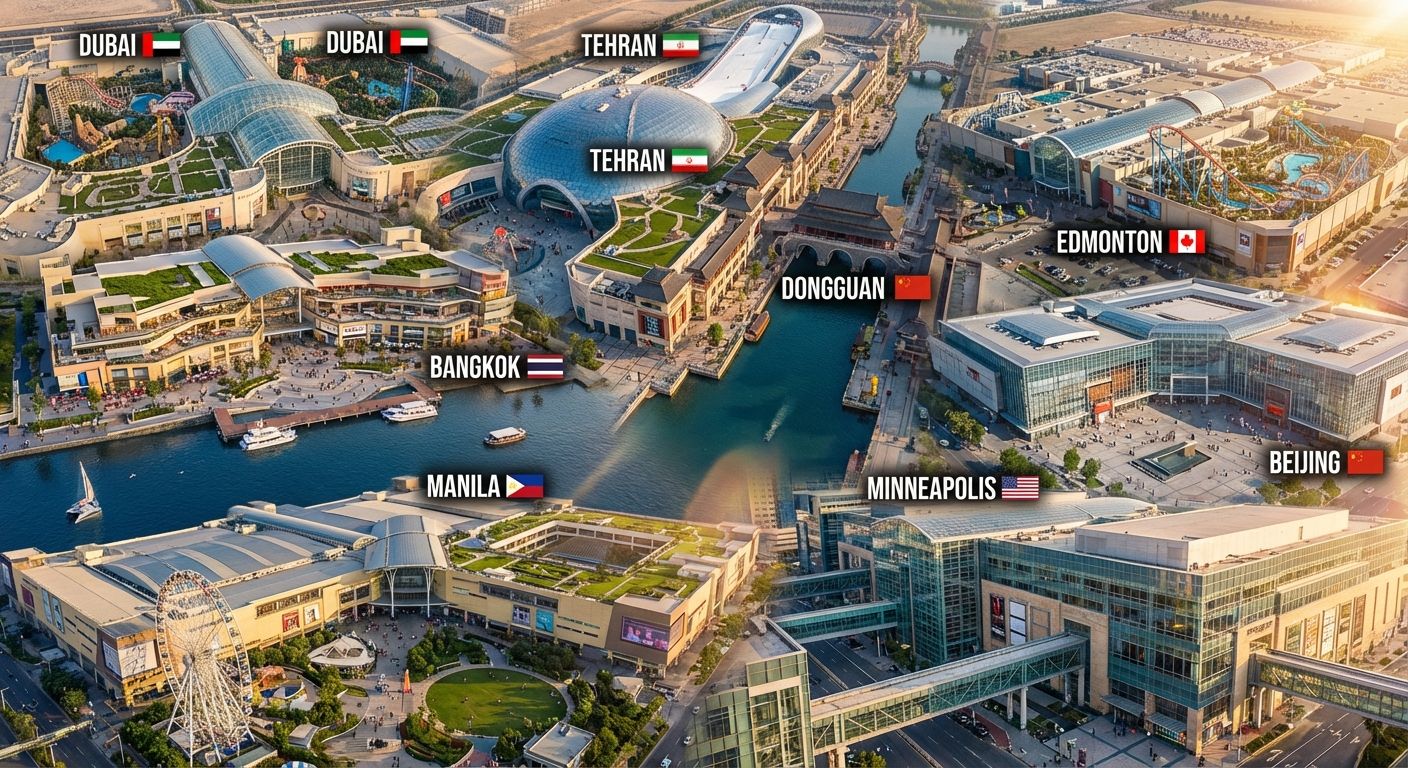
Largest shopping malls in the world is a topic that blends architecture, commerce and tourism: these sprawling complexes are more than retail—they are urban destinations. Below you’ll find a carefully curated ranking of the top 20 malls based on reported total area and gross floor area (figures vary by source). For each entry we highlight approximate size, location, key attractions and what makes it stand out.
How this ranking was compiled
Measurements for mall size can differ (total floor area, gross leasable area, or built area). This article prioritizes reported total floor area and widely cited sources such as official sites and Wikipedia. When exact figures vary, we use approximate values and link to reliable references so you can verify details.
Ranking: The 20 Largest Shopping Malls in the World
Below are the 20 largest shopping malls with concise profiles. Sizes are approximate and listed in square meters (m²). Each profile includes notable attractions and a contextual note about visitor experience.
1. Iran Mall — Tehran, Iran
- Approx. total area: 1,950,000 m² (total complex area)
- Opened: Phased openings since 2018
- Highlights: Massive cultural spaces, public library, indoor gardens, traditional bazaar sections, sports and exhibition areas.
- Why it’s unique: Designed as a hybrid cultural-commercial complex, the Iran Mall blends shopping with cultural facilities and large public spaces.
- Source: Iran Mall (Wikipedia)
2. The Dubai Mall — Dubai, United Arab Emirates
- Approx. total area: 1,124,000 m² (total area); GLA varies in sources
- Opened: 2008
- Highlights: Dubai Aquarium & Underwater Zoo, Dubai Ice Rink, Fashion Avenue, adjacency to Burj Khalifa and Dubai Fountain.
- Why it’s unique: Integration with iconic city landmarks and a strong focus on tourism, entertainment and luxury retail.
- Source: The Dubai Mall (Wikipedia)
3. New South China Mall — Dongguan, China
- Approx. total area: ~659,612 m²
- Opened: 2005
- Highlights: Themed retail zones modeled after global cities (Venice, Paris, Amsterdam); historical notoriety for low occupancy and gradual revitalization.
- Why it’s unique: Large themed spaces and a dramatic example of retail overbuilding and later recovery attempts.
- Source: New South China Mall (Wikipedia)
4. SM Mall of Asia — Pasay, Philippines
- Approx. total area: ~406,962 m²
- Opened: 2006
- Highlights: Seaside location, IMAX theaters, concert venues and an Olympic-sized skating rink.
- Why it’s unique: Combines large-scale retail with coastal views and entertainment spaces popular with both locals and tourists.
- Source: SM Mall of Asia (Wikipedia)
5. West Edmonton Mall — Edmonton, Canada
- Approx. total area: ~490,000 m² (one of North America’s largest)
- Opened: 1981 (phased expansions)
- Highlights: Indoor amusement park, World Waterpark, indoor lake with boat rides, themed attractions.
- Why it’s unique: Built as a self-contained entertainment city; a historic model of malls as anchor leisure destinations.
- Source: West Edmonton Mall (Wikipedia)
6. Golden Resources Shopping Mall (Great Mall) — Beijing, China
- Approx. total area: ~560,000 m²
- Opened: 2004
- Highlights: Extensive retail floors with a mix of local and international brands.
- Why it’s unique: Known early on for size and for showing China’s rapid retail expansion.
- Source: Golden Resources Mall (Wikipedia)
7. Isfahan City Center — Isfahan, Iran
- Approx. total area: ~465,500 m²
- Opened: 2012
- Highlights: Integrated commercial, residential and entertainment components; large indoor amusement areas.
- Why it’s unique: Large regional hub combining shopping with cultural and residential programming.
- Source: Isfahan City Center (Wikipedia)
8. SM City North EDSA — Quezon City, Philippines
- Approx. total area: ~497,000 m²
- Opened: 1985 (multiple expansions)
- Highlights: Multiple retail wings, IMAX and Sky Garden; major transit link in Metro Manila.
- Why it’s unique: A high-traffic urban mall that mixes retail scale with city connectivity.
- Source: SM City North EDSA (Wikipedia)
9. SM Megamall — Mandaluyong, Philippines
- Approx. total area: ~474,000 m²
- Opened: 1991
- Highlights: Entertainment zones, multiplex cinemas, extensive retail variety.
- Why it’s unique: One of the largest single-site shopping complexes in the Philippines with heavy local footfall.
- Source: SM Megamall (Wikipedia)
10. Mall of America — Bloomington, Minnesota, USA
- Approx. total area: ~520,000 m² (includes Nickelodeon Universe theme park)
- Opened: 1992
- Highlights: Indoor theme park (Nickelodeon Universe), aquarium, hundreds of stores and robust tourist infrastructure.
- Why it’s unique: A US-based mall designed to be a major tourist attraction beyond shopping.
- Source: Mall of America (Wikipedia)
11. CentralWorld — Bangkok, Thailand
- Approx. total area: ~550,000 m²
- Opened: 1990 (major redevelopment after 2010)
- Highlights: Large retail mix, dining, offices and frequent cultural events in prime Bangkok location.
- Why it’s unique: Positioned as a mixed-use commercial hub in one of Asia’s busiest cities.
- Source: CentralWorld (Wikipedia)
12. SM Seaside City Cebu — Cebu City, Philippines
- Approx. total area: ~470,000 m²
- Opened: 2015
- Highlights: Waterfront-facing design, observation tower, entertainment and lifestyle offerings.
- Why it’s unique: A modern regional destination combining scenic appeal with large retail and leisure areas.
- Source: SM Seaside City (Wikipedia)
13. Berjaya Times Square — Kuala Lumpur, Malaysia
- Approx. total area: ~700,000 m² (mixed-use complex with hotel and residences)
- Opened: 2003
- Highlights: Indoor amusement park, extensive retail floors and integrated hotel/residence towers.
- Why it’s unique: Combines entertainment, lodging and shopping in one vertical complex.
- Source: Berjaya Times Square (Wikipedia)
14. SM City Tianjin — Tianjin, China
- Approx. total area: ~565,000 m²
- Opened: 2016 (varies by phase)
- Highlights: Modern retail formats, leisure and integrated services.
- Why it’s unique: Represents a trend of very large multi-level retail developments across China.
- Source: SM Tianjin (Wikipedia)
15. The Avenues — Kuwait City, Kuwait
- Approx. total area: ~385,000 m² (phased expansions produce larger campus)
- Opened: 2007 (continued expansion)
- Highlights: Luxurious retail mix, outdoor promenades and themed districts.
- Why it’s unique: Regional prestige mall popular with residents and Gulf visitors.
- Source: The Avenues (Wikipedia)
16. Istanbul Cevahir — Istanbul, Turkey
- Approx. total area: ~420,000 m²
- Opened: 2005
- Highlights: Large retail floors, central European-style atrium and strong transport links.
- Why it’s unique: One of the largest malls in Europe with a strategic city location.
- Source: Istanbul Cevahir (Wikipedia)
17. SM City North EDSA — (already listed at #8; alternatives)
Note: Some regional chains appear multiple times in global rankings (SM group, for example). Where data overlaps or lists differ, consider checking the latest official figures.
18. King of Prussia Mall — King of Prussia, Pennsylvania, USA
- Approx. total area: ~279,000 m² (largest mall in the USA by leasable area)
- Opened: 1963 (many expansions)
- Highlights: High-end retail corridors, major department stores and proximity to Philadelphia.
- Why it’s unique: The dominant super-regional mall in the U.S. retail market.
- Source: King of Prussia Mall (Wikipedia)
19. SM City Xiamen — Xiamen, China
- Approx. total area: ~300,000–450,000 m² (varies by reporting)
- Opened: Various SM expansions across China
- Highlights: Regional retail magnet with mixed leisure components.
- Why it’s unique: An example of regional mall scale driven by major retail operators.
- Source: SM Supermalls (Wikipedia)
20. Various large regional malls (consolidated entry)
The final slot recognizes that numerous very large malls—such as additional SM Supermalls, large Gulf-area complexes and Chinese mega-malls—are often close in size. Because reporting methods differ, consult the linked sources for the latest verifiable measurements. Notable names often appearing in extended lists include: SM City Cebu, SM City North EDSA (again), New South China variants and other major regional centers.
Trends and common features among the largest malls
- Mixed-use design: Many of the largest malls combine retail with hotels, residences, offices and cultural facilities.
- Entertainment-first strategy: Theme parks, aquariums, skating rinks and event arenas transform malls into tourist attractions.
- Transit connectivity: Top malls are often integrated with major transit hubs to support massive footfall.
- Phased growth: Large complexes typically expand over many years, changing rank as new wings are added.
Visiting tips for travelers and shoppers
- Check opening hours and peak times—many malls are busiest on weekends and holidays.
- Use mall maps and transit guides; large complexes can be disorienting without a plan.
- Explore attractions beyond shopping: aquariums, museums and performance spaces offer memorable experiences.
- Look for tax-free shopping or tourist discounts if visiting from abroad.
Further reading and sources
For updated figures and more detail, consult official mall websites and consolidated lists such as Wikipedia’s List of largest shopping malls. Additional context on retail real estate and gross leasable area definitions can be found at industry sites like Statista and trade publications (e.g., RetailDive).
Conclusion
The largest shopping malls in the world are showcases of modern retail’s scale and adaptability: they blend commerce with culture, entertainment and urban functions. Whether you’re planning a shopping-focused trip or researching retail architecture, visiting one of these mega-centers offers insight into how consumer spaces are evolving globally.
Note: Figures in this article are approximate and based on publicly reported totals. For the latest official numbers, follow the links provided for each mall.