Types of coffee invite exploration: from the first wild beans in Ethiopia to the espresso machines in bustling cities, coffee has evolved into a global culture. This guide covers the history, main varieties and brewing methods, pairing suggestions and a carefully selected ranking of the most appreciated coffees — designed for lovers, beginners, baristas and coffe owners.
A brief history of coffee: origins and global spread
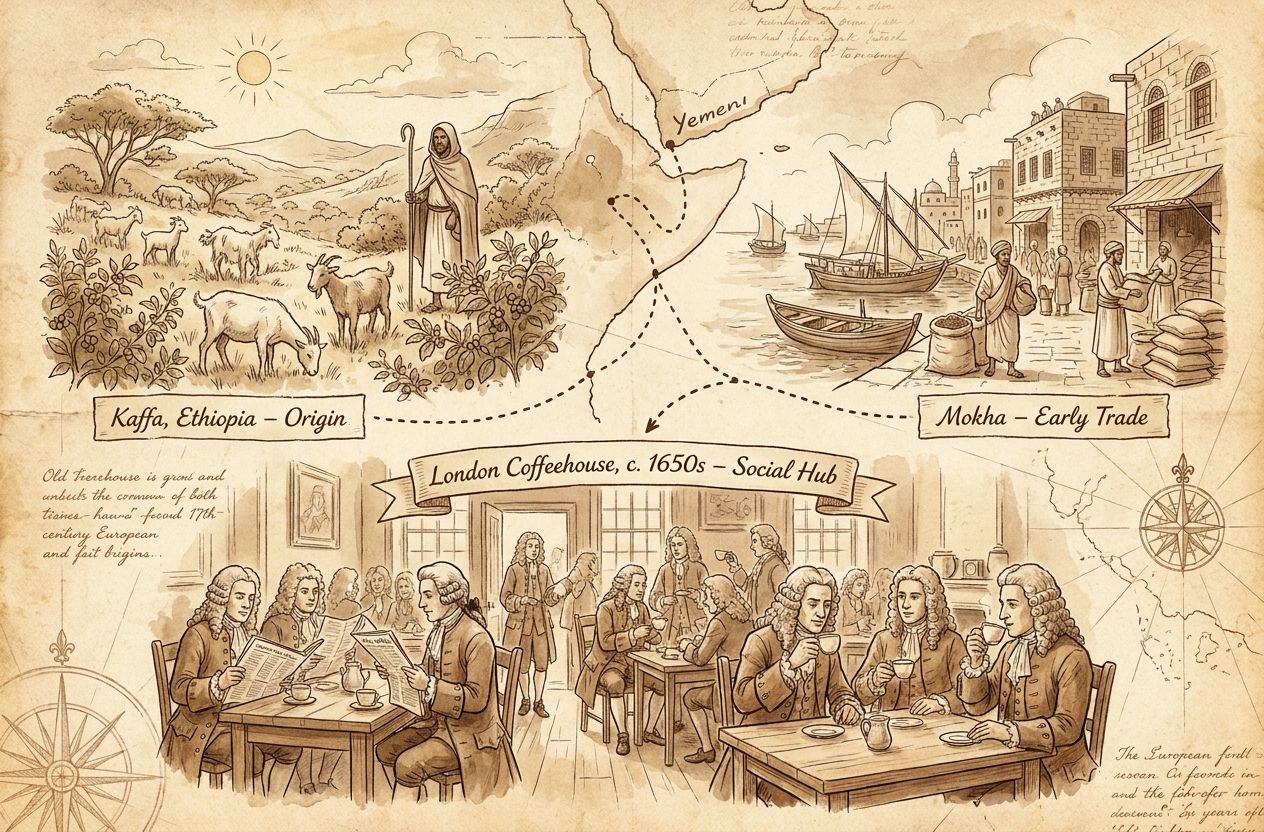
The story of coffee begins in the highlands of Ethiopia, where, according to legend, a goatherd named Kaldi noticed his goats became energetic after eating red cherries. By the 15th century, coffee cultivation and trade had spread to the Arabian Peninsula. Yemen became a center for coffeehouses (qahveh khaneh), and by the 17th century, coffee had reached Europe, Asia and the Americas, driven by trade routes and colonial cultivation. For an authoritative overview, see Britannica’s entry on coffee history: Britannica – Coffee.
Key historical milestones:
- 15th–16th centuries: Coffee consumed in Sufi monasteries and Yemeni ports.
- 17th century: Coffeehouses emerge in Europe as centers of social life and commerce.
- 18th–19th centuries: Coffee plantations expand in Latin America and Asia; Arabica becomes the dominant species in specialty markets.
- 20th–21st centuries: Industrialization, espresso culture and the modern specialty coffee movement reshape production, roasting and brewing.
The botanical and commercial types: Arabica vs Robusta and beyond
When discussing types of coffee, it’s essential to separate botanical species from beverage styles. The two main commercial species are Coffea arabica (Arabica) and Coffea canephora (Robusta).
Arabica (Coffea arabica)
Arabica tends to produce a sweeter, more nuanced cup with floral, fruity and acidic notes. It is grown at higher altitudes and represents the majority of specialty coffee.
Robusta (Coffea canephora)
Robusta beans are hardier, yield more caffeine and often present a stronger, more bitter flavor with earthy or nutty notes. Robusta is common in espresso blends and instant coffee.
Other species and varietals
Beyond species, there are numerous varieties, cultivars and processing styles that define terroir: Bourbon, Typica, Caturra, Gesha (Geisha) and many experimental hybrids. Single-origin coffees highlight regional character, while blends combine strengths to create consistent profiles.
Main beverage types and brewing methods
In practice, when people speak of types of coffee, they often mean beverage styles and preparation methods. Below are the most influential categories and how they shape flavor.
Espresso-based drinks
- Espresso: A concentrated shot brewed under pressure. The base for many drinks.
- Americano: Espresso diluted with hot water; similar strength to drip coffee, but with espresso characteristics.
- Cappuccino: Equal parts espresso, steamed milk and milk foam.
- Latte: More steamed milk than foam; creamy and smooth.
- Flat white: Microfoam-based, velvety texture, popular in Australia/New Zealand.
- Macchiato and Cortado: Espresso with a small amount of milk; highlight espresso’s intensity.
Filtered and immersion methods
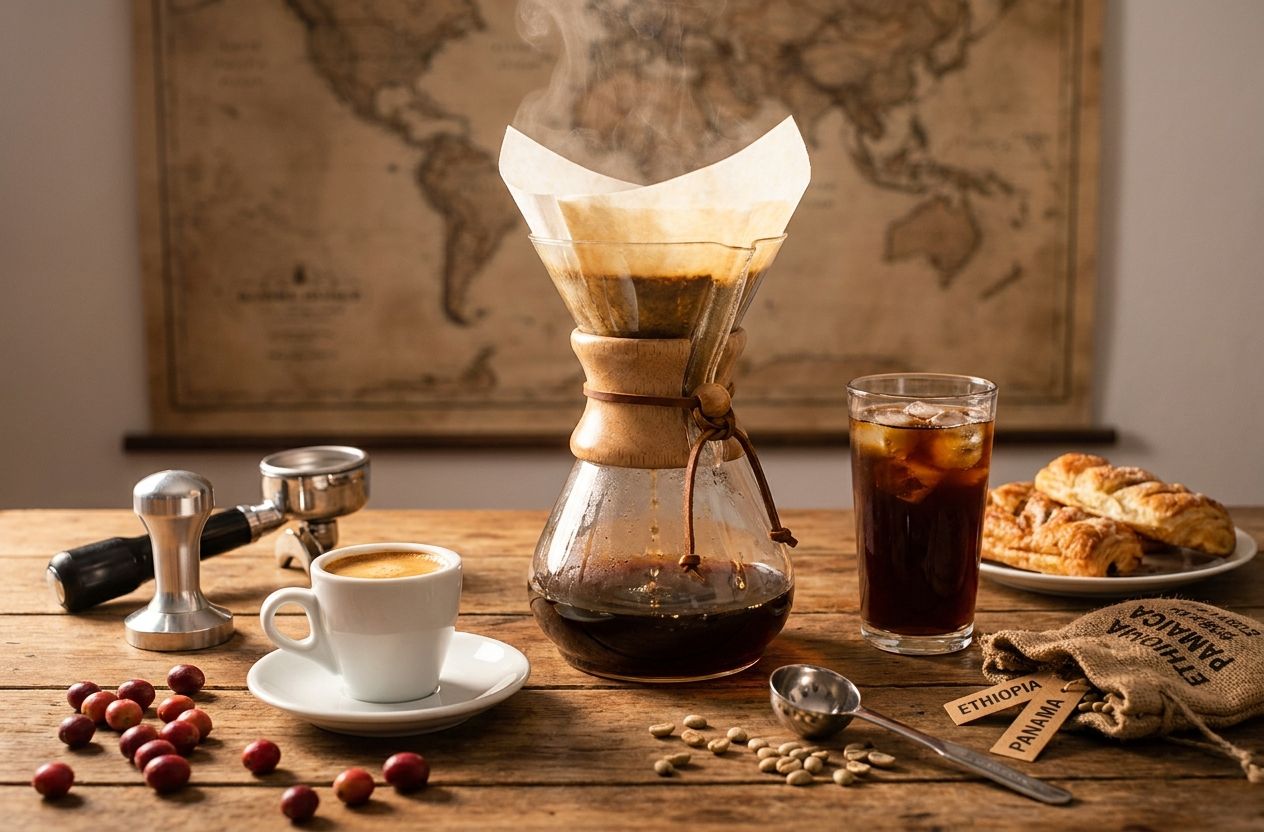
- Pour-over (V60, Chemex): Clean, bright cup; highlights acidity and intricate flavors.
- French press: Full-bodied, heavier mouthfeel due to immersion and oils.
- Aeropress: Versatile and quick; can mimic espresso-like concentration or produce a clean filter-style cup.
- Cold brew: Long, cold extraction producing low acidity and smooth, sweet notes.
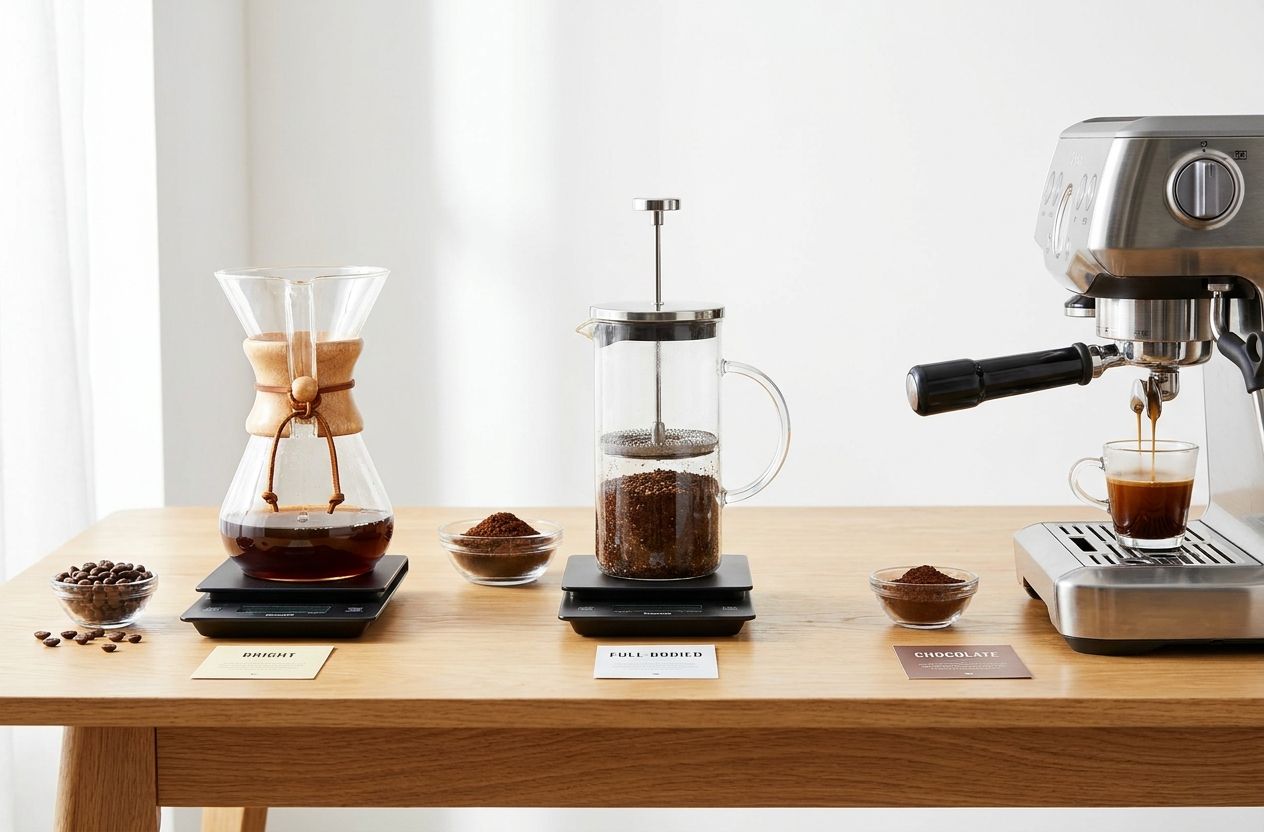
Each method alters extraction, body and perceived acidity. For practical brewing guidance, the Specialty Coffee Association provides useful standards: Specialty Coffee Association.
Flavor profiles and how to read them
Understanding flavor profiles helps match coffees to pairings. Common descriptors include acidity (brightness), body (mouthfeel), aroma, and specific tasting notes (berry, chocolate, citrus, floral, nutty). Cupping forms and tasting notes (often used by roasters) are valuable tools for evaluating coffees.
Best pairings: match coffee to food and occasion
Pairing coffee with food enhances both. Consider the coffee’s body, acidity and sweetness when choosing accompaniments.
Breakfast and pastries
- Bright, acidic coffees (light roasts, fruity notes) pair well with citrus pastries, yogurt, and fruit-based breakfasts.
- Chocolatey or nutty coffees (medium roasts) complement croissants, almond pastries and granola.
Desserts and rich dishes
- Full-bodied, low-acid coffees (dark roasts or cold brew) are excellent with chocolate desserts, cheesecake and caramel-based sweets.
- Espresso-based drinks cut through rich desserts and also pair well with creamy tiramisu or panna cotta.
Cheese and savory pairings
- Washed-process coffees with moderate acidity pair surprisingly well with soft cheeses.
- Smoky or chocolate-forward beans can complement cured meats and savory breakfast dishes.
Pairing tips: Think of coffee as wine—match intensity, balance acidity against fat/sweetness, and let complementary flavors (nutty, floral, fruity) guide choices.
The 10 most appreciated coffees in the world (curated ranking)
This list combines historical prestige, specialty acclaim, flavor uniqueness and cultural appreciation. It is meant as a guide to explore notable coffees across origins and styles.
- Gesha (Geisha) from Panama — Renowned for floral, jasmine and bergamot notes; prized in specialty auctions and for its delicate complexity.
- Blue Mountain (Jamaica) — Smooth, mild, and balanced with subtle sweetness; historically one of the most sought-after premium coffees.
- Kona (Hawaii, USA) — Smooth, clean profile with mild acidity and nutty undertones; limited regional production increases prestige.
- Ethiopian Yirgacheffe — Bright, tea-like body with floral and berry notes; often celebrated for its vibrant acidity and complexity.
- Sumatra Mandheling (Indonesia) — Earthy, full-bodied, low acidity with herbal and chocolatey notes; prized for its distinctive mouthfeel.
- Colombian Supremo (Colombia) — Balanced, medium-bodied with caramel and fruity notes; widely appreciated for consistency and versatility.
- Brazilian Santos — Chocolatey, nutty and sweet; forms the backbone of many espresso blends and is prized for roast consistency.
- Kenyan AA — Pronounced acidity, vibrancy and blackcurrant-like notes; valued for clarity and bright flavors.
- Guatemalan Antigua — Cocoa and spice notes with a balanced body; celebrated for its complexity and regional terroir.
- Vietnamese Robusta (traditional Vietnamese coffee) — Strong, bitter, high-caffeine profile that forms the basis for iconic preparations like cà phê sữa đá (iced milk coffee).
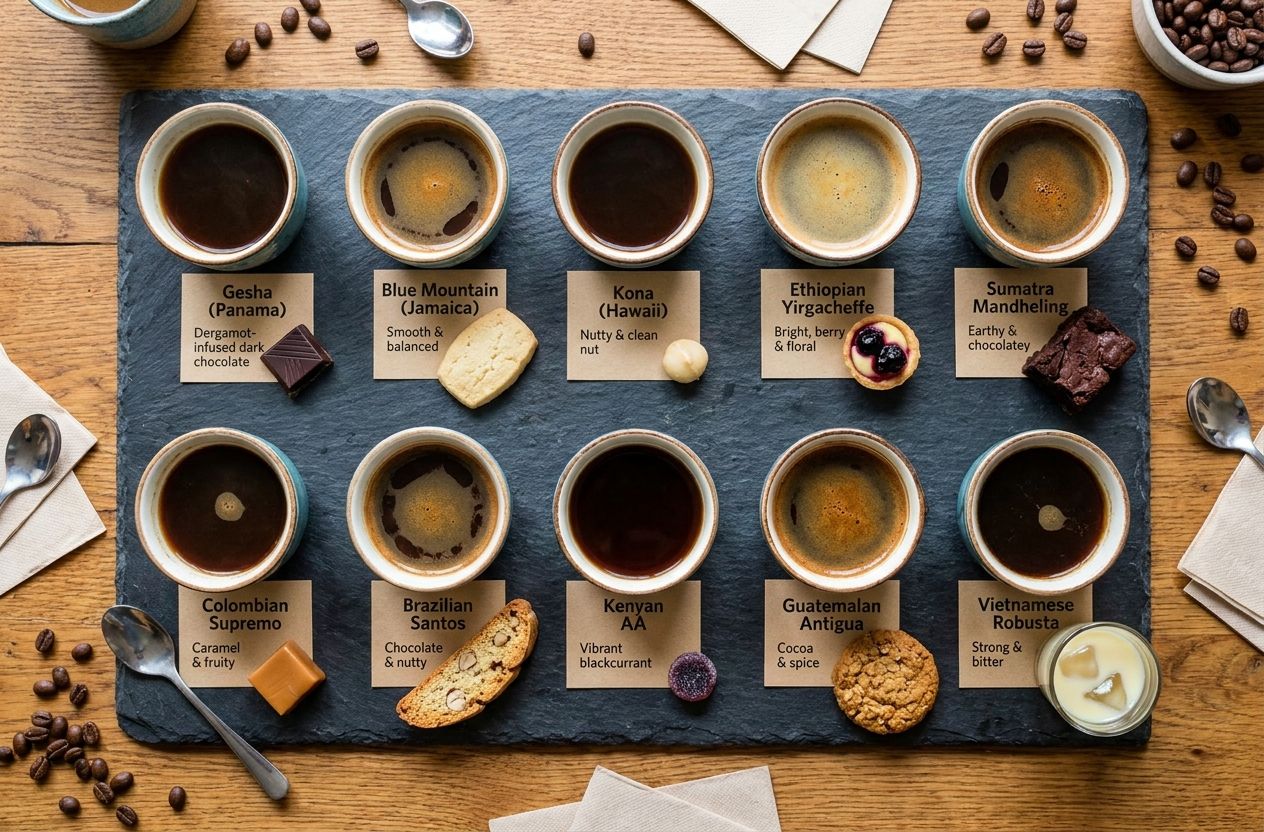
Each of these coffees offers a distinct experience. For sourcing and regional details, check reputable resources like World Coffee Research: World Coffee Research.
How to choose, buy and store coffee
Choosing the right coffee means considering roast date, origin, processing and intended brew method.
- Buy fresh: Look for roast dates; aim to brew within 2–4 weeks of roast for whole beans.
- Whole bean vs ground: Whole beans retain aromatics longer; grind just before brewing for best flavor.
- Storage: Store in a cool, dark, airtight container away from moisture and heat; avoid the fridge/freezer for daily-use beans.
Practical brewing tips for great results
- Water quality: Use filtered water; coffee is 98–99% water and water chemistry affects extraction.
- Grind size: Adjust for method: fine for espresso, medium for pour-over, coarse for French press.
- Ratio and time: Start with common ratios (e.g., 1:16 coffee-to-water for filter, 1:2 for espresso) and tweak to taste.
- Consistency: Measure by weight, not volume, and keep time and temperature stable.
Coffee culture and etiquette
Coffee is a cultural ambassador. From traditional ceremonies in Ethiopia to Italian espresso bars and third-wave specialty cafes, understanding local customs enriches tasting experiences. Respect brewing traditions and ask baristas for recommendations tailored to your preferences.
Conclusion: exploring types of coffee as a lifelong journey
Exploring the types of coffee is both a sensory and cultural journey. Whether you’re discovering single-origin nuances, experimenting with brewing methods or pairing coffee with food, the key is curiosity and informed tasting. Use the pairing tips, brewing guidelines and the top-10 list here as a starting point to expand your palate and share new experiences with friends or customers.
Further reading and resources: Britannica for history, Specialty Coffee Association for standards, and World Coffee Research for agricultural and varietal insights.