
Exercises to lose weight are a cornerstone of any effective fat-loss strategy. This comprehensive guide explains the top 15 exercises that consistently produce high calorie expenditure, elevate metabolism and support body fat reduction. You’ll find clear benefits, intensity levels, safety precautions and practical programming tips to incorporate these movements into a balanced weekly plan.
Why exercise matters for weight loss?
Exercise contributes to weight loss in two main ways: by increasing total energy expenditure (calories burned during and after activity) and by preserving or increasing lean muscle mass, which raises resting metabolic rate. While nutrition ultimately determines weight loss, the right mix of cardio, strength training and high-intensity work amplifies results and improves body composition, fitness and health markers (Mayo Clinic, Harvard Health).
How exercises are ranked here
Exercises below are evaluated by:
- Estimated calorie burn (for a 70 kg / 154 lb person; varies by intensity and individual).
- Afterburn effect (EPOC) — how much metabolism stays elevated post-exercise.
- Muscle groups engaged — more muscle involvement typically means higher calorie burn.
- Accessibility and scalability for beginners to advanced trainees.
Top 15 exercises to lose weight (what they do and how to use them)
1. Running / Jogging
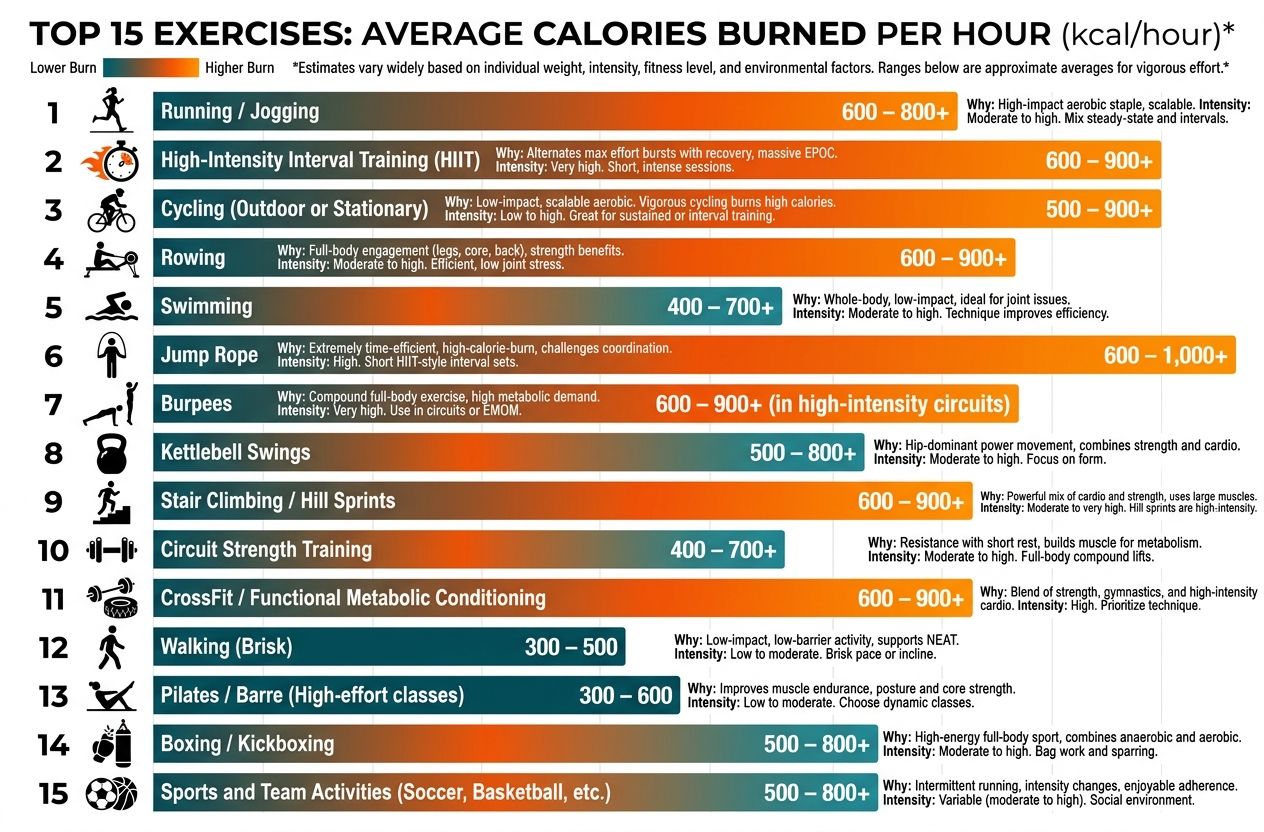
Why it works: Running is a high-impact aerobic staple that burns significant calories per minute and can be scaled from jogging to sprint intervals. A steady 10 km/h run can burn ~600–800 kcal/hour depending on weight and terrain.
Intensity: Moderate to high. Include a mix of steady-state runs and interval sprints.
How to incorporate: 2–3 sessions per week (one interval session, one tempo run, one long run). Pay attention to footwear and joint health; consider soft surfaces.
2. High-Intensity Interval Training (HIIT)
Why it works: Alternating short bursts of maximum effort with recovery produces massive calorie burn and EPOC. HIIT sessions (20–30 minutes) often burn as many calories as longer steady-state cardio but with superior metabolic aftereffects.
Intensity: Very high. Not recommended for absolute beginners without modification.
How to incorporate: 2 sessions/week; examples include 30s sprint / 90s walk repeats or circuit-style bodyweight intervals. See guidelines from ACSM for program safety.
3. Cycling (Outdoor or Stationary)
Why it works: Low-impact, scalable aerobic exercise. Vigorous cycling (e.g., 20–25+ km/h or intense spin classes) can burn 500–900 kcal/hour depending on intensity and rider weight.
Intensity: Low to high. Great for sustained cardio or interval training.
How to incorporate: Mix long moderate rides with interval-based spin classes. Proper bike fit prevents injury.
4. Rowing
Why it works: Full-body movement engaging legs, core and back — high calorie burn and strength benefits. Vigorous rowing can reach 600–900 kcal/hour.
Intensity: Moderate to high. Efficient for conditioning and low joint stress.
How to incorporate: 20–40 minute sessions including steady state and intervals. Combine with strength days for balanced programming.
5. Swimming
Why it works: Whole-body, low-impact exercise ideal for overweight individuals or those with joint issues. Depending on stroke and intensity, swimming can burn 400–700 kcal/hour.
Intensity: Moderate to high. Technique matters; consider lessons to improve efficiency.
How to incorporate: 2–3 weekly sessions mixing laps, drills and intervals. Swim workouts also improve cardiovascular fitness and mobility.
6. Jump Rope
Why it works: Extremely time-efficient, high-calorie-burn exercise that challenges coordination and cardiovascular capacity. Can burn 600–1,000 kcal/hour at high intensity.
Intensity: High. Beginners can start with intervals of 30–60 seconds and progress.
How to incorporate: Short HIIT-style interval sets (e.g., 5 rounds of 1 min on / 1 min off) as warm-ups or standalone sessions.
7. Burpees
Why it works: Compound, full-body exercise combining squat, plank and jump — high metabolic demand in a short time. Excellent for EPOC and conditioning.
Intensity: Very high. Modify by removing the jump or step-back plank for beginners.
How to incorporate: Use in circuits or EMOM (every minute on the minute) workouts. 3–5 rounds of 30–60 seconds each can be brutal but effective.
8. Kettlebell Swings
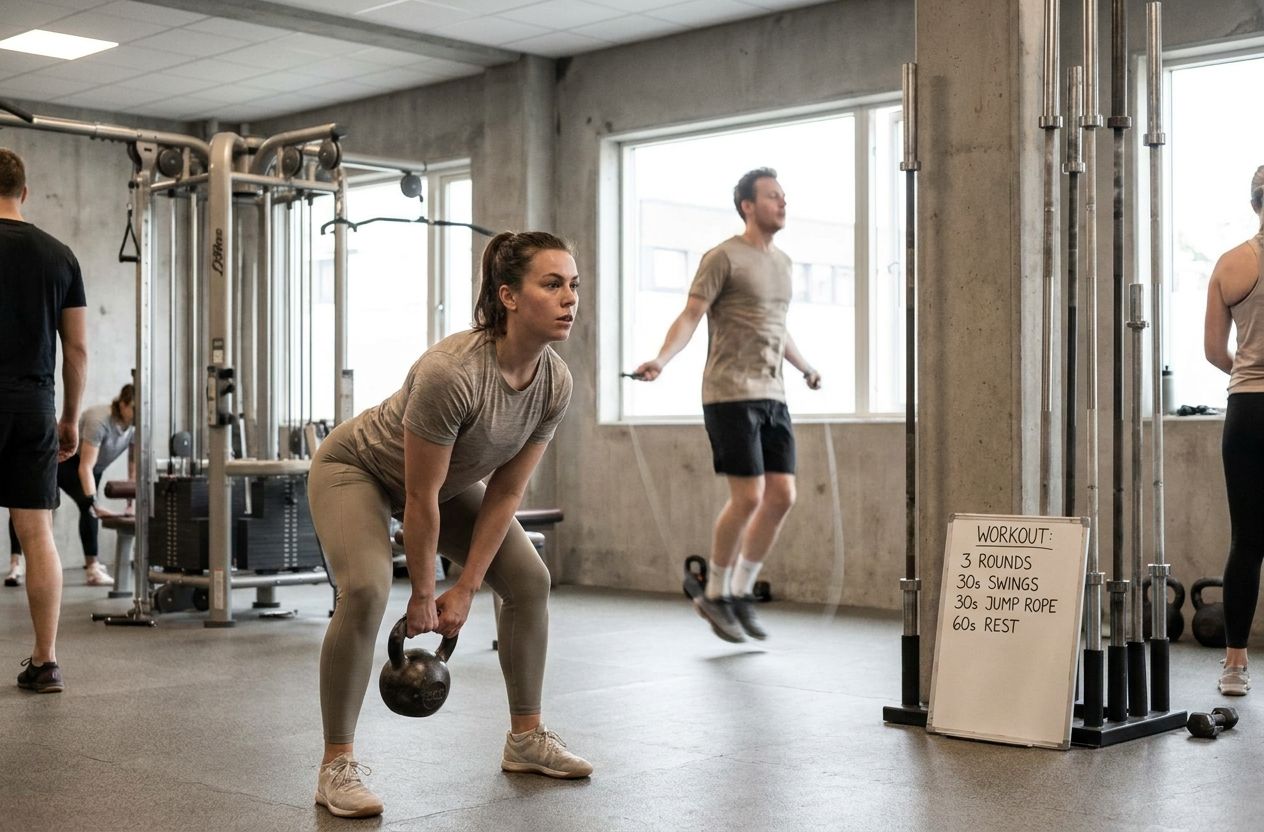
Why it works: Hip-dominant power movement that combines strength and cardio. High calorie burn while building posterior chain strength.
Intensity: Moderate to high. Focus on hip hinge mechanics.
How to incorporate: 20–30 second swing intervals with rests, or part of a circuit. Start with lighter weights to master form.
9. Stair Climbing / Hill Sprints
Why it works: Powerful mix of cardio and strength; climbing uses large muscle groups at higher resistance — very efficient for calorie burn.
Intensity: Moderate to very high. Hill sprints are high-intensity; stair walking can be moderate.
How to incorporate: 6–10 hill sprints of 10–20 seconds or 20–40 minutes of stair climbing at a steady pace.
10. Circuit Strength Training
Why it works: Combining resistance exercises with short rest increases heart rate, burns calories and builds/maintains muscle mass — crucial for long-term fat-loss and metabolic health.
Intensity: Moderate to high. Use full-body compound lifts (squat, deadlift, press, rows) in circuits.
How to incorporate: 3 circuits of 6–8 exercises, 30–45 seconds each with minimal rest, 2–3 times/week.
11. CrossFit / Functional Metabolic Conditioning
Why it works: Blend of strength, gymnastics and high-intensity cardio designed to maximize calorie burn and functional fitness. Many WODs (workouts of the day) are metabolically demanding.
Intensity: High. Progress gradually and prioritize technique.
How to incorporate: 3–5 sessions/week depending on recovery and experience. Work with coaches for scaling options.
12. Walking (Brisk)

Why it works: Low-impact, low-barrier activity that supports NEAT (non-exercise activity thermogenesis). While per-minute calorie burn is lower, consistent walking contributes significantly to weekly caloric deficit and recovery.
Intensity: Low to moderate. Aim for brisk pace (4–5 km/h) or incline walking.
How to incorporate: Daily 30–60 minute walks; use after meals to support metabolism. Great for beginners and recovery days.
13. Pilates / Barre (High-effort classes)
Why it works: When taught at higher intensity, these classes improve muscle endurance, posture and core strength — increasing calorie burn relative to gentle variants and improving exercise quality elsewhere.
Intensity: Low to moderate. Choose more dynamic classes for higher metabolic effect.
How to incorporate: 1–2 weekly sessions as complement to cardio and strength work.
14. Boxing / Kickboxing
Why it works: High-energy, full-body sport combining anaerobic and aerobic demands — excellent for calorie burn, coordination and stress relief. Typical class burns 500–800 kcal/hour depending on intensity.
Intensity: Moderate to high. Bag work and pad rounds increase effort.
How to incorporate: 1–3 weekly classes or intervals of bag work mixed with conditioning.
15. Sports and Team Activities (Soccer, Basketball, etc.)
Why it works: Intermittent running, changes of direction and game intensity create high calorie expenditure and enjoyable adherence — which is essential for consistent weight loss.
Intensity: Variable (moderate to high). Social environment improves long-term consistency.
How to incorporate: Participate weekly or use sport-specific drills as conditioning.
How to choose the best exercises for you
Selection depends on preferences, current fitness, injuries and schedule. For sustainable weight loss, combine three pillars:
- Cardio conditioning (running, cycling, rowing, swimming) to raise calorie burn.
- Resistance training (strength circuits, kettlebell swings, compound lifts) to preserve/increase muscle and metabolic rate.
- High-intensity work (HIIT, sprints, burpees) to maximize EPOC and fitness gains.
Sample weekly routine for beginners and intermediates
Beginner (4 days/week):
- Day 1: 30–40 min brisk walk + 15 min bodyweight circuit (squats, push-ups, planks)
- Day 2: Rest or active recovery (light swim or mobility)
- Day 3: 20 min cycle or jog + 10 min core work
- Day 4: Strength circuit (3 rounds of 6 exercises) 30–40 min
- Day 5: Rest
- Day 6: HIIT starter (10–15 min of intervals) + 10 min cool-down
- Day 7: Long walk or recreational sport 45–60 min
Intermediate (5–6 days/week):
- Day 1: Interval run (30 min) + mobility
- Day 2: Strength training (lower body focus)
- Day 3: Cross-training (row or cycle intervals)
- Day 4: Strength training (upper body focus)
- Day 5: HIIT or CrossFit-style metcon
- Day 6: Active recovery or sport
- Day 7: Rest
How to maximize calorie burn and fat loss
- Combine resistance and cardio: Maintain muscle while creating deficits through cardio and diet.
- Use progressive overload: Gradually increase intensity, duration or load to avoid plateaus.
- Prioritize recovery: Sleep, hydration and nutrition drive adaptation and metabolic function (World Health Organization recommendations on physical activity and sleep are useful references).
- Monitor nutrition: Sustainable calorie deficit combined with adequate protein (1.2–2.0 g/kg depending on goals) preserves muscle mass.
- Increase daily movement: NEAT (walking more, standing breaks) can add substantial weekly calorie expenditure.
Safety, modifications and precautions
Before starting any exercise program, consider screening for medical conditions and consult professionals if needed. Key precautions:
- Begin gradually: Build consistency before intensity. For high-impact exercises (running, jump rope), start with shorter sessions and increase load.
- Master technique: For kettlebell swings, squats and lifts, prioritize form to avoid injury — consider sessions with a certified trainer.
- Manage load and recovery: Alternate intense days with active recovery and ensure adequate sleep.
- Modify for limitations: Swap low-impact options (swimming, cycling, rowing) for those with joint issues.
Measuring progress beyond the scale
Scale weight is one metric but can be misleading as you gain muscle while losing fat. Track changes using:
- Body measurements (waist, hips, chest)
- Progress photos
- Performance metrics (increased reps, heavier loads, faster runs)
- Energy, sleep quality and mood
Final recommendations
Consistency beats perfection. Choose a mix of enjoyable, sustainable exercises from this list and progressively increase intensity. Pair training with sensible nutrition, adequate sleep and stress management. If uncertain, consult certified professionals (e.g., personal trainers, registered dietitians) to tailor programs to your needs.
For more detailed guidance on exercise prescriptions and safety, visit reputable sources like Mayo Clinic, Harvard Health and the American College of Sports Medicine.