

The fear of failing can paralyze ambitions, stall careers and intensify anxiety, but it can also be a powerful signal that guides learning and growth. This guide explains why this fear arises, how it operates emotionally and cognitively, and offers practical, research-backed strategies to develop self-confidence, resilience and a healthier relationship with failure.
Why the fear of failing exists: psychological and emotional causes
Understanding the origins of the fear of failing is the first step to reducing its power. Several psychological and emotional factors commonly contribute:
- Evolutionary and survival instincts: Avoiding failure historically protected individuals from social exclusion or physical danger. Today, those instincts can translate into avoidance behavior and anxiety when facing perceived threats to status, security or belonging.
- Perfectionism: People with perfectionistic tendencies set unrealistically high standards. The thought of falling short triggers intense fear, shame or self-criticism.
- Imposter syndrome: When individuals feel their achievements are undeserved, they fear exposure and failure more acutely.
- Negative early experiences: Critical parenting, harsh academic judgment or highly punitive environments teach the brain to associate mistakes with danger rather than learning.
- Overgeneralization and catastrophizing: Cognitive distortions—like thinking that one failure means permanent incompetence—fuel anticipatory anxiety.
Research in psychology and neuroscience shows that these responses are part cognitive and part emotional: neural circuits that process threat (amygdala) interact with higher-level reasoning (prefrontal cortex), sometimes leading to an emotional response that overrides rational evaluation. For further reading on the neuroscience of fear and decision-making, visit the American Psychological Association: https://www.apa.org.
How fear of failing shows up in daily life
The way the fear of failing appears varies by context. Common patterns include:
- Avoidance: Not applying for jobs, not submitting work or delaying projects to avoid potential failure.
- Procrastination: Putting tasks off as a protective strategy against imperfect outcomes.
- Overpreparation: Spending excessive time on minor details to feel “safe,” which can reduce creativity and productivity.
- Self-sabotage: Behaving in ways that make failure more likely—subconscious protection against higher perceived risks.
- Rigid thinking: Black-and-white beliefs about success and worth that leave little room for incremental progress.
Goal: From fear to functional caution
Not all fear is bad. A small, calibrated level of worry can improve preparation and focus. The objective is to transform paralyzing fear into functional caution—enough concern to prepare and learn, not enough to prevent action.
Practical strategies to manage and reduce the fear of failing
Below are evidence-based techniques that address cognitive, behavioral and emotional aspects of the fear of failing. Combine several to create a personalized plan.
1. Reframe failure: change the story you tell yourself
Language shapes perception. Replace defeat-focused self-talk with growth-oriented messages:
- Old: “If I fail, it means I’m incompetent.”
- New: “This outcome gives me data about what to improve.”
Adopt a growth mindset—the belief that skills and intelligence can be developed—which research associates with persistence and improved learning outcomes (see Carol Dweck’s work: https://www.apa.org/monitor/2016/03/ce-corner).
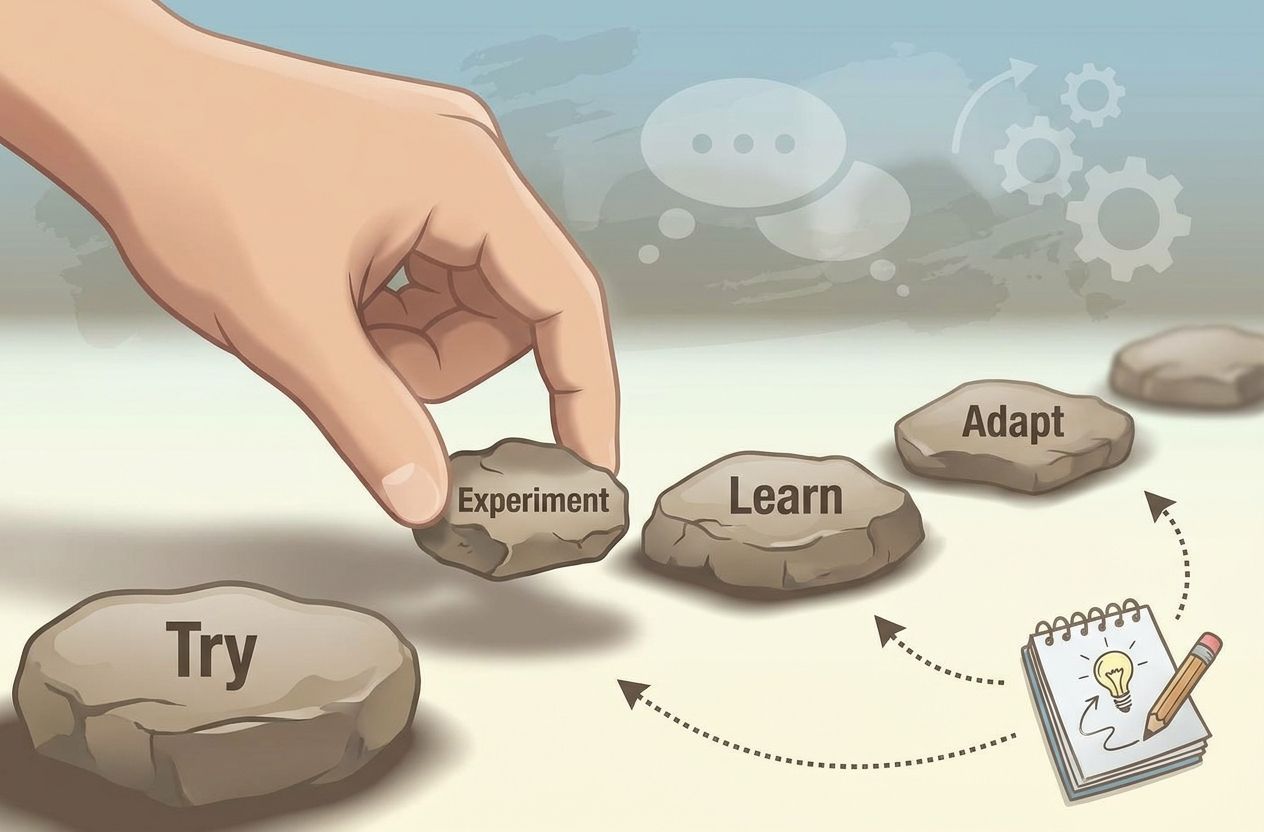
2. Break big risks into small experiments
Reduce perceived threat by treating high-stakes goals as a series of low-stakes experiments. This approach makes outcomes controllable and feedback frequent.
- Create mini-goals with measurable criteria.
- Run quick pilots or prototypes rather than committing fully at first.
- Document learnings deliberately after each small attempt.
Example: If you’re afraid to launch a product, release a minimal viable version to a small user group and use feedback to iterate.
3. Practice exposure gradually (behavioral activation)
Behavioral therapies recommend graded exposure: intentionally facing feared situations in steps. This reduces avoidance and builds tolerance.
- List situations that trigger your fear, from least to most anxiety-provoking.
- Select the first item and take a small action toward it.
- Reflect on the outcome and repeat with gradually harder tasks.
Over time, repeated exposure lowers anxiety and increases perceived competence.
4. Build emotional regulation skills
Tools like mindfulness, breathing exercises and cognitive reappraisal help manage the immediate distress that accompanies the fear of failing.
- Mindful grounding: Use the 5-4-3-2-1 technique (name 5 things you see, 4 you can touch, etc.) to bring your attention to the present.
- Breathing: Box breathing (inhale 4s, hold 4s, exhale 4s, hold 4s) can down-regulate the sympathetic nervous system.
- Emotional labeling: Naming the emotion (“I feel anxious about this task”) reduces amygdala activation and improves cognitive control.
5. Strengthen self-confidence with evidence
Confidence grows when you collect proof of competence. Create a “success file”:
- Save performance reviews, grateful emails, metrics and examples of completed projects.
- Review this file before high-pressure moments to counter negative self-talk.
Reflect on incremental wins and how you overcame past setbacks—this practice reframes personal narrative from “I can fail” to “I have learned and adapted.”
6. Use cognitive restructuring to challenge distorted beliefs
Identify automatic thoughts that elevate the fear of failing and test them against evidence. Typical cognitive distortions include all-or-nothing thinking, fortune telling and catastrophizing.
- Write the thought, gather evidence for and against it, and generate balanced alternative thoughts.
- Use questions: “What is the worst that could happen? How likely is it? How would I cope if it did happen?”
7. Cultivate resilience through routine and recovery
Resilience is not only mental toughness; it’s the capacity to recover. Key supports include:
- Regular sleep and exercise: Physical health underpins emotional regulation.
- Social support: Mentors, peers and friends who normalize setbacks and offer perspective.
- Deliberate recovery: Time for hobbies and rest to avoid burnout and maintain creativity.
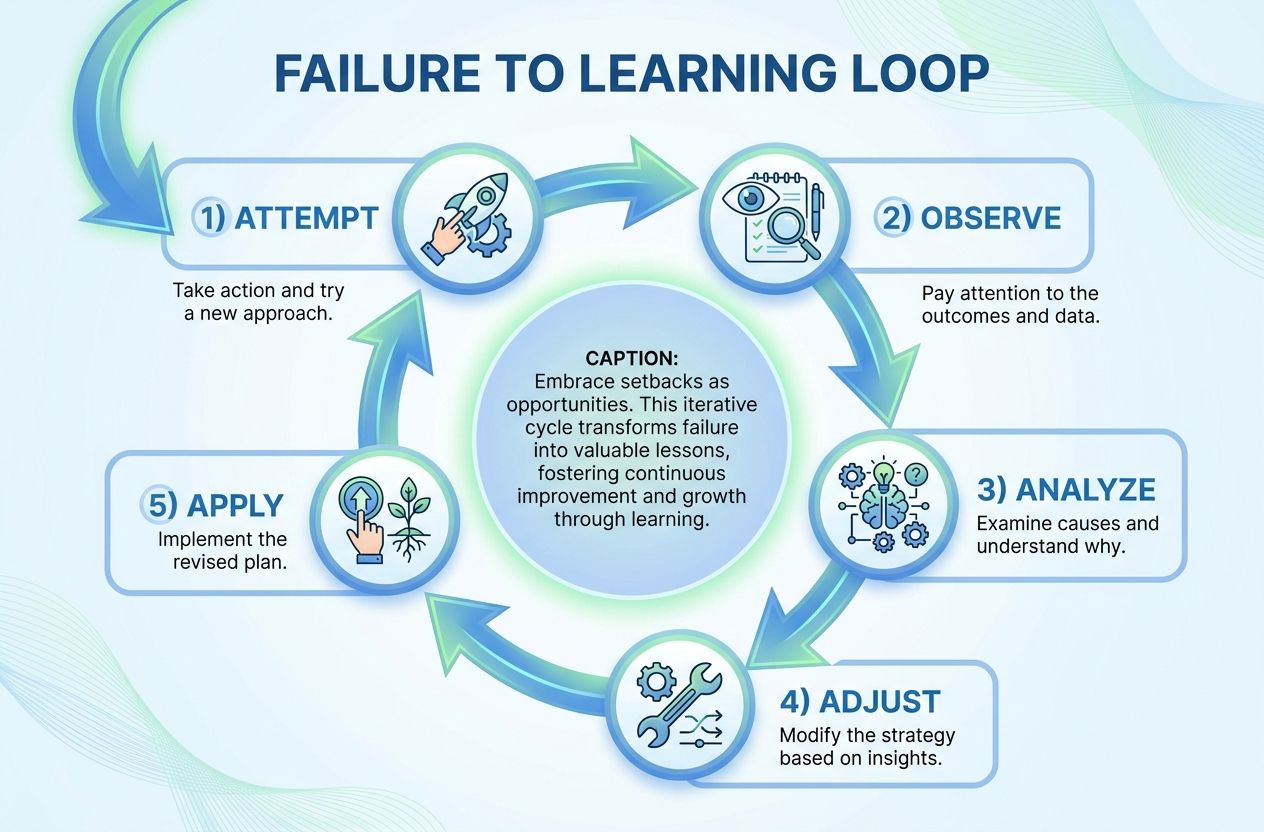
8. Turn setbacks into structured learning
Create a short post-mortem process to analyze failures without blame. Keep it constructive:
- Describe what happened factually.
- Identify contributing factors (internal and external).
- Note what to repeat and what to change next time.
Document actionable insights and set one small, measurable improvement for the next iteration.
Practical exercises you can start today
Try these quick practices to reduce avoidance and build momentum:
- Five-minute experiment: Choose a task you’ve been avoiding and spend exactly five focused minutes on it. Record what you learned.
- Failure reframing worksheet: Write down a recent setback and list three things you learned from it.
- Success file ritual: Add one achievement to your file every week and review the file before important meetings or interviews.
Small, consistent actions compound into greater confidence and lower sensitivity to failure.
When the fear of failing is severe: consider professional help
If avoidance and anxiety significantly impair daily functioning, seek help from a mental health professional. Evidence-based interventions like Cognitive Behavioral Therapy (CBT) and Acceptance and Commitment Therapy (ACT) are effective in treating performance anxiety and fear-related avoidance (https://www.ncbi.nlm.nih.gov/pmc/articles/PMC3181997/).
Examples and real-world applications
Students: Instead of skipping exams for fear of failure, create a graded exposure plan—start with practice tests, seek feedback, then attempt the full exam under exam-like conditions.
Entrepreneurs: Treat product launches as iterative tests, gather user feedback quickly and pivot based on evidence rather than fearing permanent reputational damage.
Professionals in transition: Use informational interviews and volunteer projects as low-risk experiments to test new career directions.
Summary and next steps
Fear of failing is a common, understandable response to uncertainty and high standards. By combining cognitive reframing, graded behavioral exposure, emotional regulation techniques and deliberate learning practices, you can shift from avoidance to action. Start small, track evidence of progress and lean on social and professional supports when needed.
Recommended resources: American Psychological Association (https://www.apa.org), National Institutes of Health (https://www.nih.gov), and practical guides on resilience from trusted mental health organizations.
Action step right now: Write down one small experiment you can run in the next 48 hours to test a fear you’ve been avoiding. Commit to five minutes and a single measurable outcome.