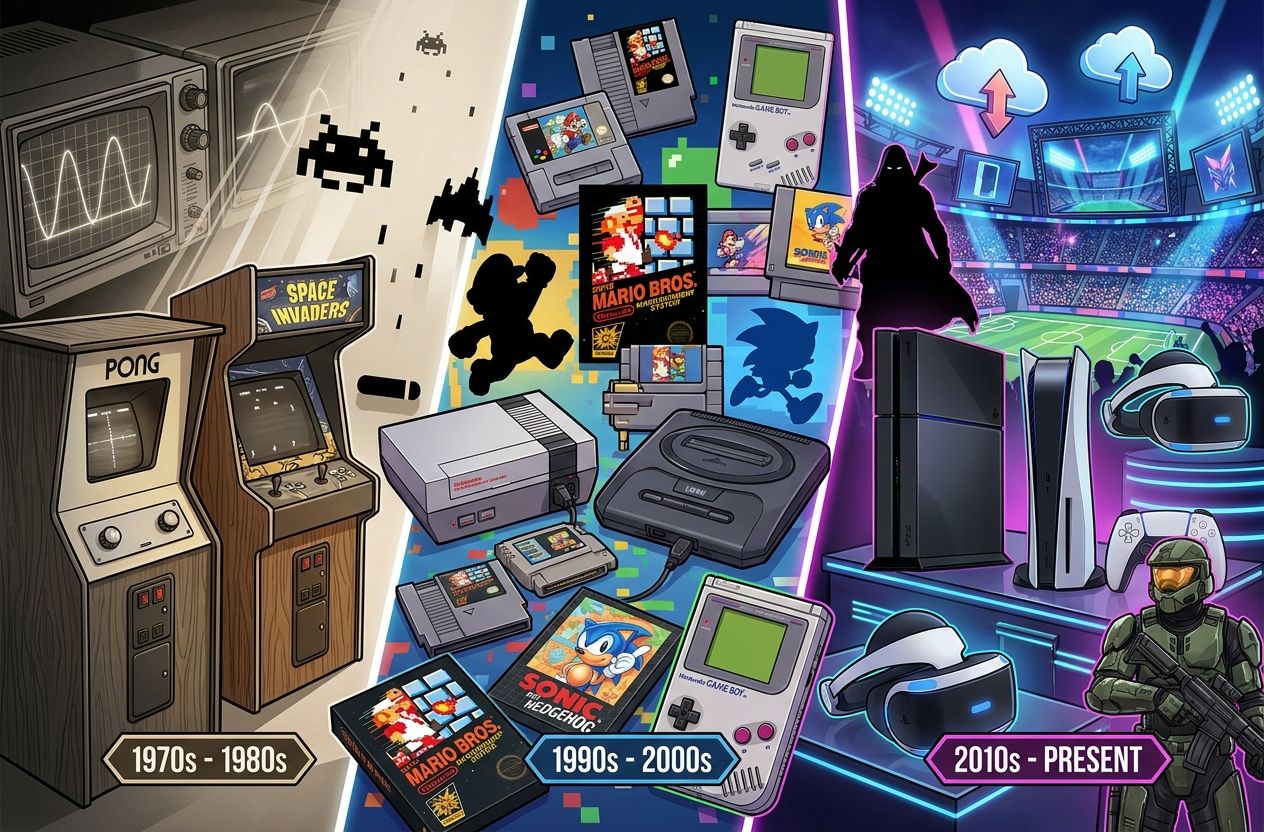
The evolution of video games began as a niche experiment in labs and arcades and grew into a dominant cultural and technological force. This comprehensive timeline covers milestones, innovations, key consoles and the cultural effects that made games an integral part of modern life.
From oscilloscopes to cloud-based multiplayer, the evolution of video games reflects decades of innovation in hardware, software, design and community. Understanding this journey helps explain not only technological progress but also changing cultural values and business models in entertainment. This article is organized chronologically, with focused sections on major eras, technical breakthroughs and intriguing facts.
Early Experiments (1940s–1960s)
The roots of modern gaming are found in early electronic experiments. Key moments include:
- 1940s–1950s: Simple analog devices and academic experiments — researchers used oscilloscopes and cathode-ray tubes to create interactive displays.
- 1958: Tennis for Two by William Higinbotham, often cited as an early interactive game displayed on an oscilloscope (source).
- 1962: Spacewar! was developed at MIT on a PDP-1 and became a foundational influence for future arcade and home games (source).
The Arcade and First Consoles (1970s)
The 1970s delivered the first commercial arcade hits and the birth of home consoles.
Arcade Revolution
Atari emerged as a pioneer: in 1972, Pong popularized coin-operated gaming across arcades, bars and public spaces. The arcade era introduced concepts such as high scores, attract modes and competitive play.
Home Consoles
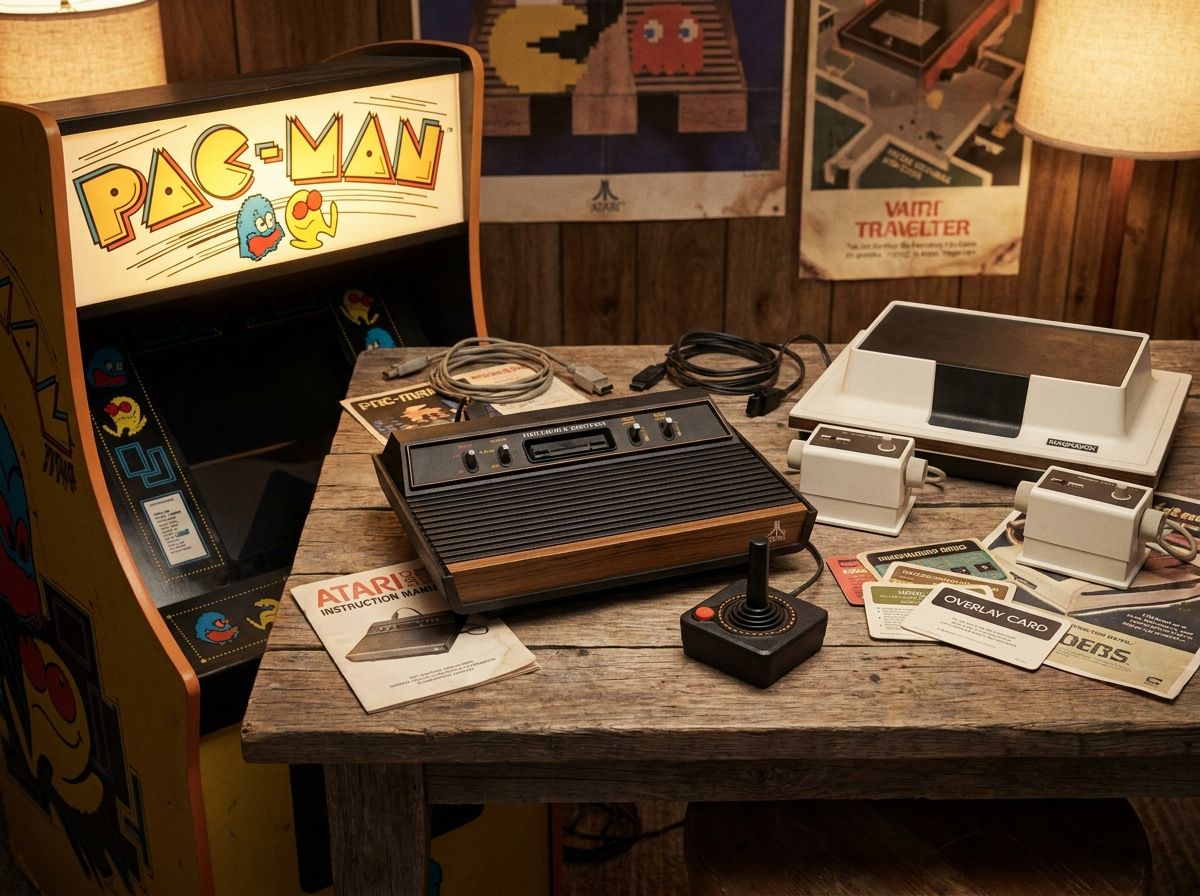
- Magnavox Odyssey (1972) — the first commercial home video game console, albeit with limited graphics.
- Atari 2600 (1977) — standardized cartridge-based games, bringing titles like Space Invaders and simple platformers to living rooms.
Golden Age and Crash (1980s)
The 1980s were a rollercoaster: explosive growth in arcades and consoles followed by a major market crash in 1983–1985.
Arcade Peak
Games like Pac-Man, Donkey Kong and Galaga defined the era. Arcades introduced immersive cabinet designs and attract modes that drew players into social spaces.
Console Saturation and the 1983 Crash
By the early 1980s, an oversaturated console market, low-quality titles and poor retail practices led to a severe industry downturn in North America. This period taught the industry lessons about quality control, licensing and supply chain management.
Renaissance and Nintendo’s Leadership (mid-1980s–1990s)
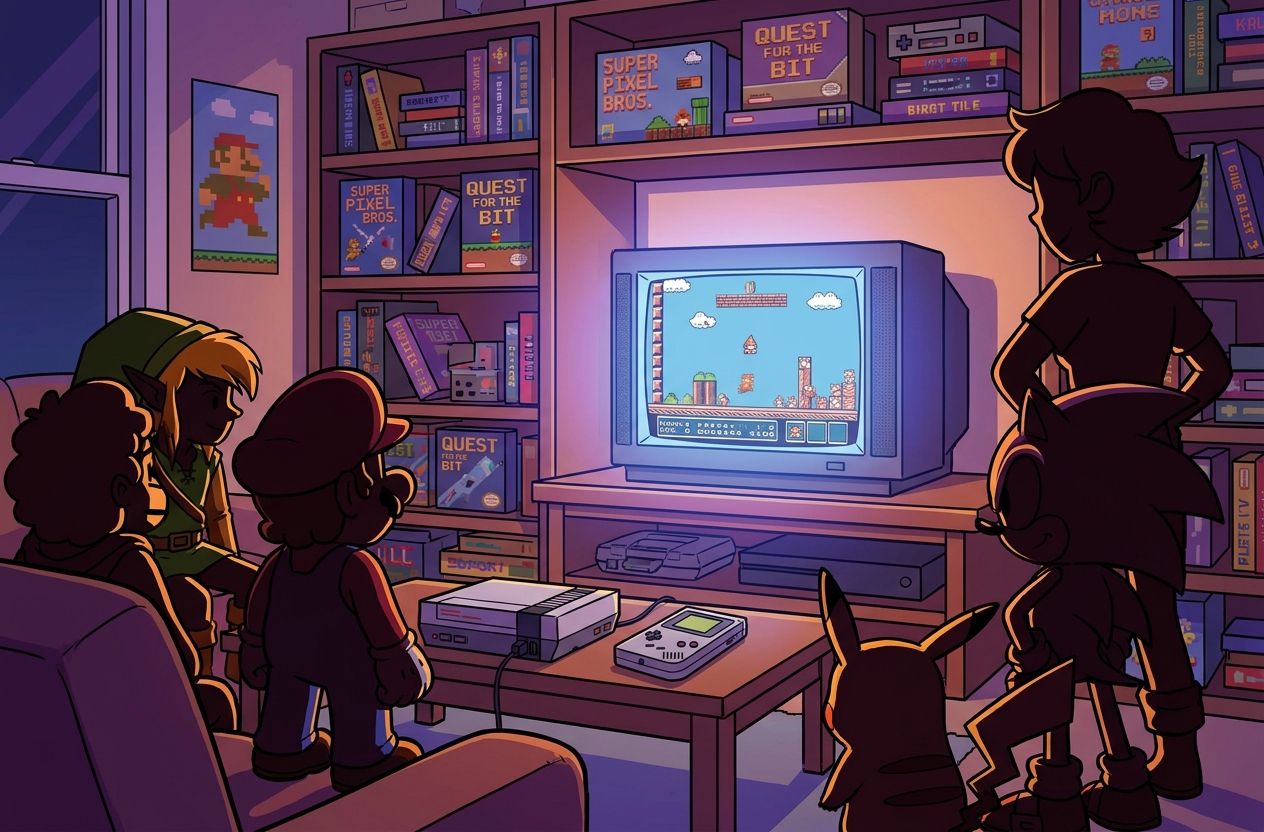
Nintendo revitalized the home console market with the Nintendo Entertainment System (NES) in 1985, introducing strict quality control and iconic franchises.
Key Developments
- Iconic Franchises: Super Mario Bros., The Legend of Zelda and Metroid set new standards for design and storytelling.
- Cartridge Ecosystem: Licensed third-party development ensured higher-quality games and a sustainable marketplace.
- Portable Gaming: The Game Boy (1989) brought gaming to pockets worldwide and spawned a massive portable market.
3D Graphics, CD-ROMs and the Rise of PC Gaming (1990s)
The 1990s were defined by leaps in graphics, storage and online connectivity.
Transition to 3D
Consoles like the Sony PlayStation and Nintendo 64 pushed 3D graphics into the mainstream. Game design adapted to new spatial possibilities with titles such as Super Mario 64 and Final Fantasy VII.
CD-ROM and Multimedia
CD-ROMs increased storage capacity, enabling full-motion video, higher-fidelity audio and expansive worlds. PC titles leveraged this for complex simulations and strategy games.
PC Gaming and Online Beginnings
PC gaming thrived with genres like RTS and FPS; early online services (e.g., dial-up, then broadband) enabled multiplayer experiences that foreshadowed the connected games of today (overview).
Modern Consoles, Mobile Explosion and Indie Scene (2000s–2010s)
The early 21st century saw diversification: powerful home consoles, the birth of mobile gaming and the rise of indie developers.
Home Consoles Evolve
PlayStation 2, Xbox and later generations increased processing power, introduced achievements/trophies and prioritized online services. Consoles became entertainment hubs, integrating streaming and social features.
Mobile Gaming
Smartphones created an enormous casual gaming market with titles like Angry Birds and Candy Crush. Mobile shifted distribution models toward free-to-play with microtransactions.
Indie Renaissance
Digital storefronts (Steam, later consoles’ stores) allowed small teams to reach global audiences. Indie titles such as Braid, Undertale and Celeste showcased innovation in narrative and mechanics.
Current Era: Streaming, Live Services and Esports (2010s–Present)
Today, the evolution of video games emphasizes services, constant updates and community-driven content.
Live Service and Games-as-a-Service
Free-to-play and subscription models have changed revenue dynamics. Games like Fortnite and Apex Legends combine seasonal content, cosmetics and events to sustain player engagement.
Cloud Gaming and Streaming
Cloud platforms (Google Stadia, NVIDIA GeForce Now, Microsoft xCloud) aim to remove hardware barriers, while streaming platforms (Twitch, YouTube Gaming) shape how communities form and consume content.
Esports and Professionalization
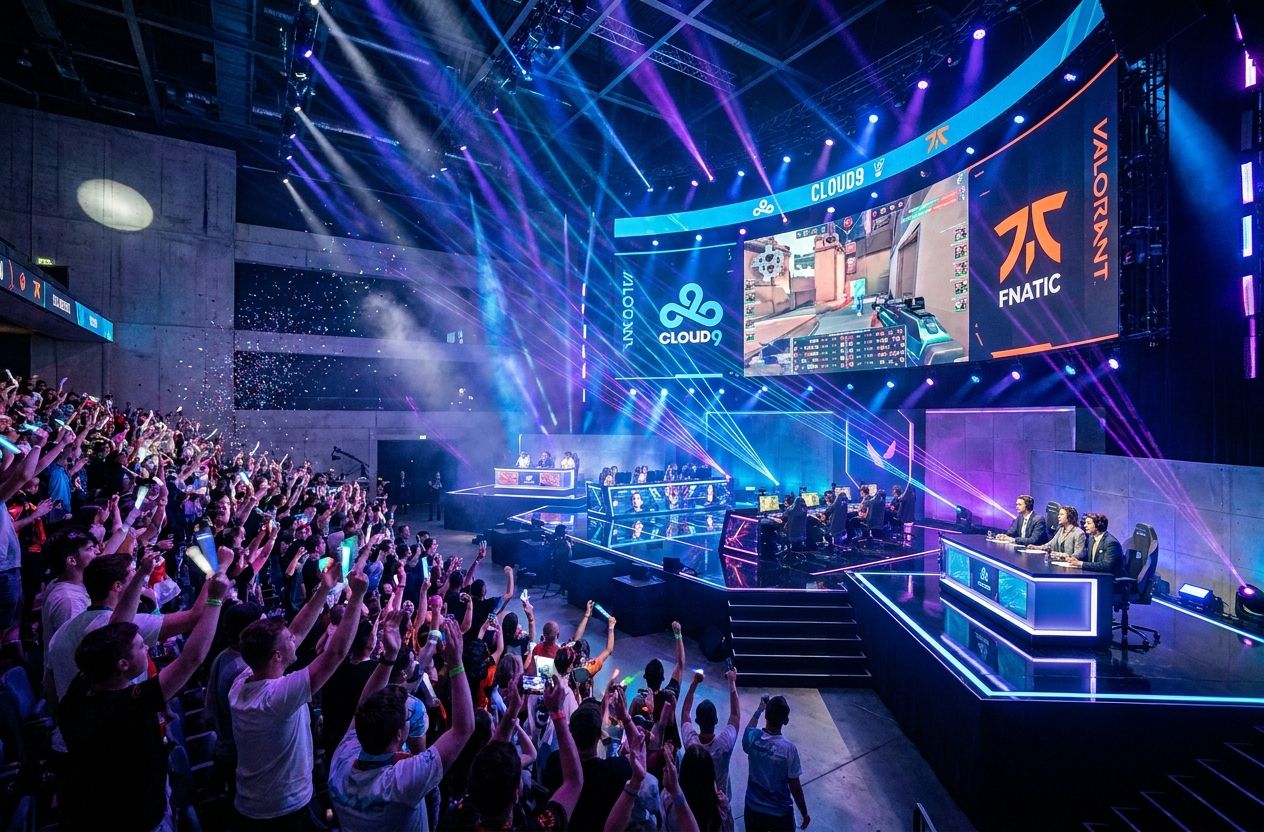
Competitive gaming has become a major cultural force, with professional leagues, sponsorships and global tournaments for games such as League of Legends, Dota 2 and various FPS titles.
Technological Milestones That Shaped the Industry
- Hardware miniaturization: From arcade boards to compact mobile SoCs.
- Graphics APIs and GPUs: Real-time 3D rendering enabled immersive visuals.
- Networking: Broadband and online services made persistent worlds possible.
- Input innovation: Motion controls, touchscreens and VR changed interaction paradigms.
Cultural and Social Impacts
Games influence music, film, fashion and social behavior. They foster communities, learning opportunities and new creative careers. At the same time, discussions about monetization, representation and mental health remain central in evaluating the industry’s long-term direction.
Interesting Curiosities and Lesser-Known Facts
- Hidden Influence: Early games were often created by single developers or small teams—contrasting sharply with modern AAA production scales.
- Preservation Challenges: Digital decay and platform obsolescence threaten access to classic titles, prompting preservation efforts by museums and archives (Smithsonian).
- Cross-Media Success: Several franchises expanded into movies, TV and merchandise, illustrating games’ role as intellectual property.
Timeline: Quick Reference of Major Milestones
- 1958: Tennis for Two
- 1962: Spacewar!
- 1972: Pong; Magnavox Odyssey
- 1977: Atari 2600
- 1980s: Golden age of arcades; 1983 crash
- 1985: NES revitalizes home consoles
- 1989: Game Boy
- 1990s: 3D graphics, CD-ROMs, PlayStation launch
- 2000s: Online gaming, mobile rise
- 2010s–Present: Live services, esports, cloud gaming
Practical Takeaways for Gamers and Enthusiasts
- Appreciate context: Knowing the history behind mechanics and genres deepens appreciation for modern designs.
- Support preservation: Back up and advocate for archival projects to keep classic games accessible.
- Explore across eras: Playing retro titles helps understand design constraints and creative problem-solving from past generations.
Further Reading and Reliable Sources
To dive deeper, check reputable references such as the Wikipedia overview on the history of video games, the Encyclopaedia Britannica entry on video games, and museum collections like the Smithsonian.
Conclusion
The evolution of video games is a story of technological innovation, cultural shifts and creative vision. From lab experiments to massive live-service universes, games continue to evolve and influence society. Whether you’re a nostalgic player or a student of technology, the history of games offers lessons about creativity, resilience and the transformative power of interactive media.